



20 Nov Denim & Curls
A dirt driveway meanders for a half mile, making its way between the Jefferson River and the Tobacco Root Mountains, leading to an unassuming pole barn owned by Tilden Yamamoto and Daniela Saavedra. The building sits on 135 acres in Waterloo, Montana and is the enchanting home of Tildenshop and Goldie Fawn Salon, an unexpected experience in the middle of nowhere.
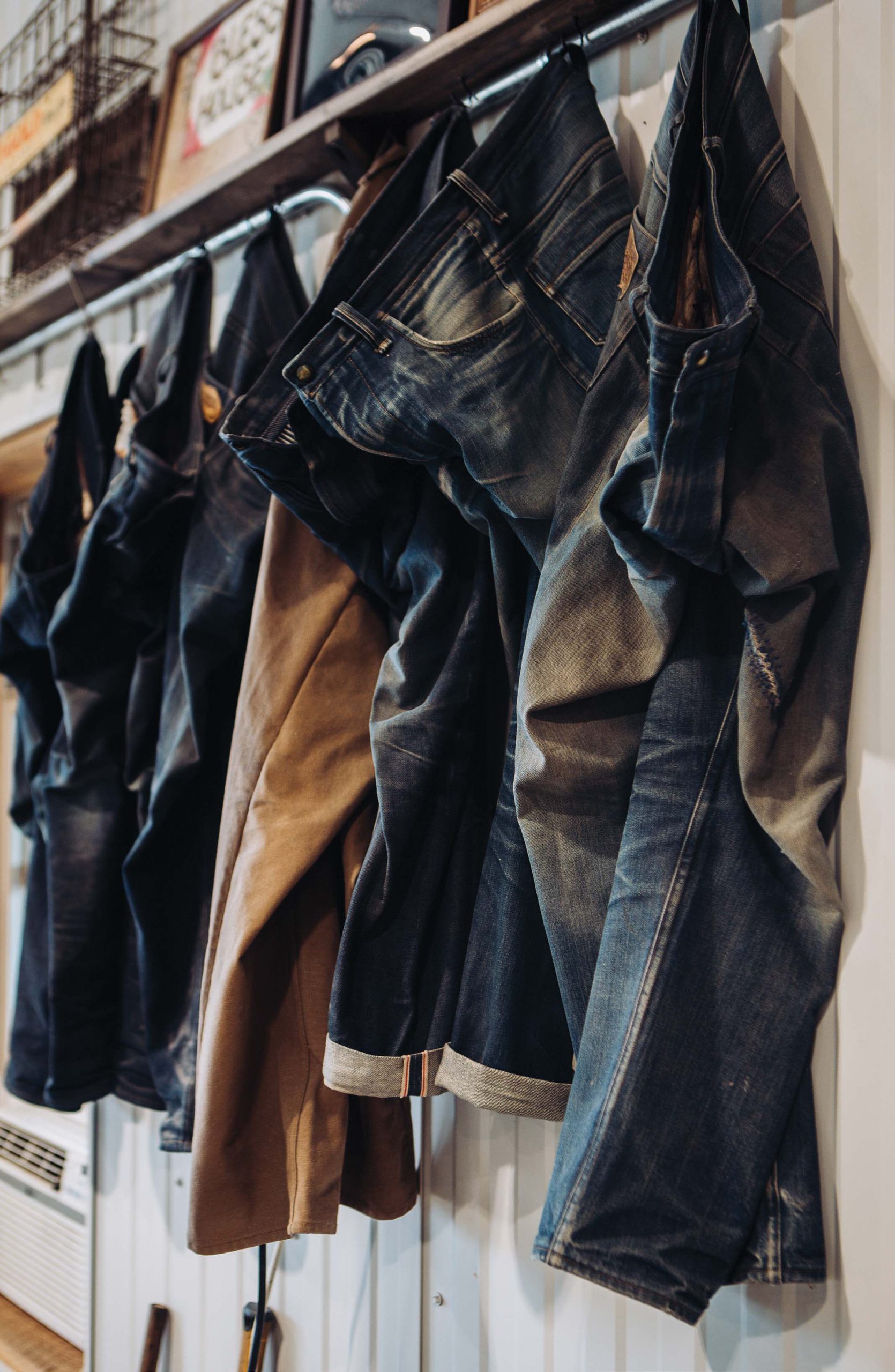
Stepping through the unmarked side door, visitors are greeted by a mini Aussie corgi named Rodeo. A row of automobiles restored by Yamamoto lines one wall while Saavedra’s hair salon is nestled into the back corner. The salon’s mirror reveals Yamamoto’s reflection as he works quietly at one of his sewing stations. Racks hang with the jeans he pours eight hours into per pair. A cluster of vintage couches invites guests to sink into their golden velour and soak up the warmth of this place and its people.
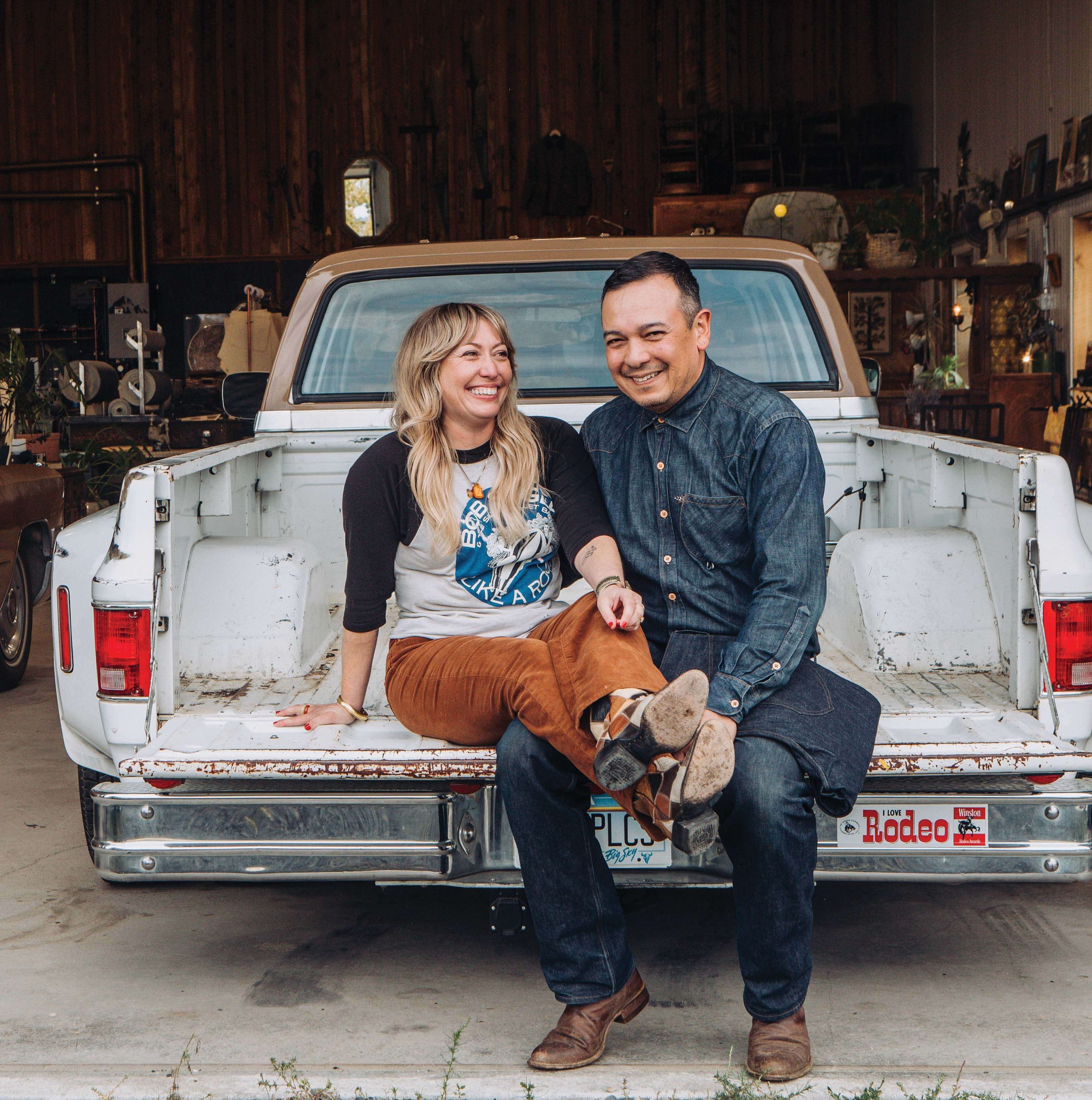
Daniela Saavedra and Tilden Yamamoto share the joy of each other’s success, truly at home in this life they have designed in southwest Montana.
Raised in Berkeley, California, Yamamoto established a love for Montana as a kid on family camping trips. Later, when he got into building cars, he recalls, “Any time I’d finish one, I’d be like, ‘I’m gonna drive it to Montana!’” And he did, making friends in places like Craig and Divide along the way. When Yamamoto applied to design school, he knew he wanted to create on his own, and that’s what he’s done since graduating in 2000.
Daniela Saavedra and Tilden Yamamoto share the joy of each other’s success, truly at home in this life they have designed in southwest Montana.
Saavedra jumped directly into cosmetology school after high school and settled in San Francisco for the next decade, making her way into a top salon, taking on an educator role for Bumble and Bumble, and earning a prestigious position with the creative director of Frédéric Fekkai. Eventually, she moved on to Oakland, where she met Yamamoto in 2016.
He was sewing in a friend’s basement, just two blocks from the salon where Saavedra spent her days. When a post about denim aprons appeared on Instagram, she reached out, and Yamamoto got to work making aprons for the entire salon. Saavedra began cutting Yamamoto’s hair and eventually became the fit model for his women’s clothing. Initially a professional connection, their relationship became personal, and Saavedra moved in with Yamamoto in 2019.
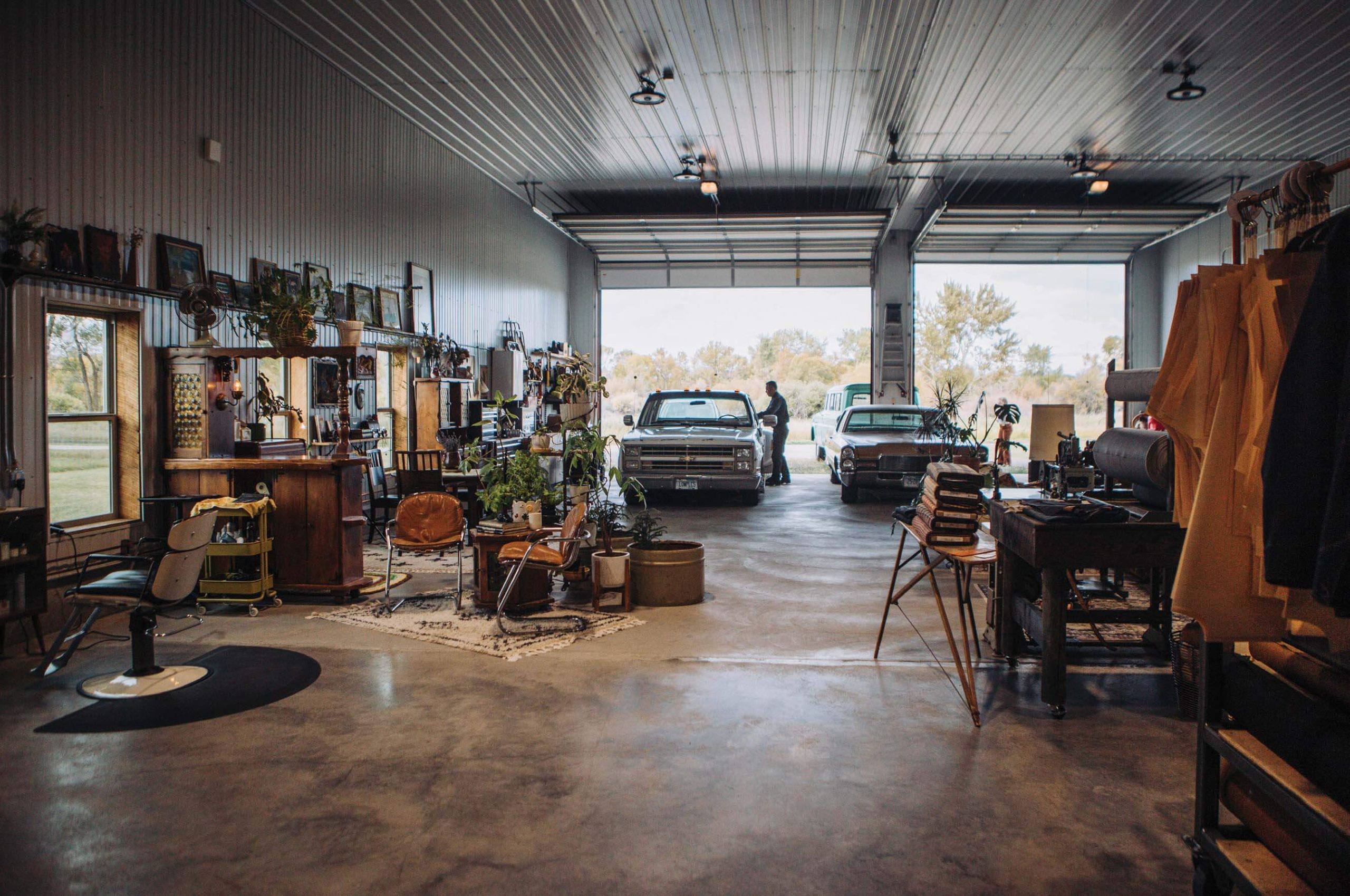
While sitting for a haircut, Saavedra’s clients are treated to beautiful views, an excellent soundtrack, and great conversation. They’re also in proximity to Yamamoto’s denim shop and his vintage car collection.
By then, she was growing weary of the salon culture, unwilling to charge her clients the high prices required to survive in the Bay Area. Together, she and Yamamoto converted a shed into a backyard salon, finishing just months before the global pandemic imposed its own changes.
Increased restrictions nudged Yamamoto and Saavedra into Montana more often, and by early 2021, they decided to move to the Treasure State.
Yamamoto convinced his parents of the idea of a family compound, then sold his home. They pooled their resources, and within four months, the family found 135 acres in southwest Montana. However, this land-only purchase meant an 18-month stay in trailers on their new property while they built their permanent homes.
Despite being from California, the couple insists they felt accepted by their new neighbors right away, attributing this to an early fencing project they tackled where Saavedra pounded the 200 posts.
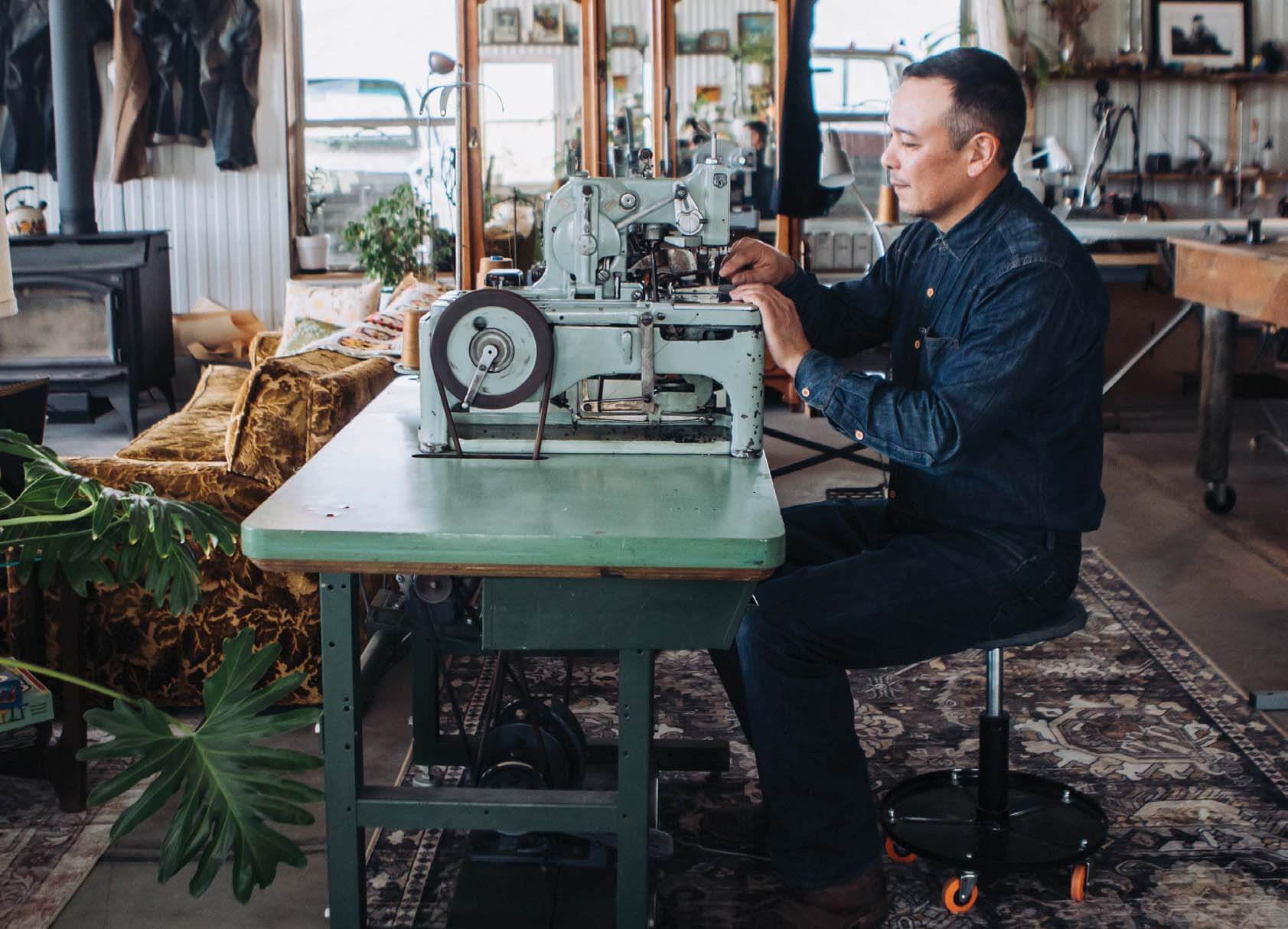
An iconic 1950 Reece keyhole buttonhole machine loudly and quickly produces just one of many of the fine-detailing components of Yamamoto’s workwear.
“We borrowed the skid steer, got the materials, strung all the barbwire,” Yamamoto says. “It took us three weeks, but we did it ourselves. Everyone was watching, so I think that just gave us a little street cred.”
The couple made friends at local bars, helped where they could, and hired neighbors when possible. During construction, before he could set up his studio, Yamamoto worked for a company digging ditches and met many of the area’s tradespeople. When the holidays rolled around, neighbors welcomed them into their homes.
Now, three years later, with the sewing machines unpacked, Yamamoto is back to work trying to keep tradition alive, one pair of jeans at a time. With today’s fast fashion model, it’s rare to find a one-person shop making any piece of clothing from start to finish, and he is proud to be doing exactly that with his denim workwear.
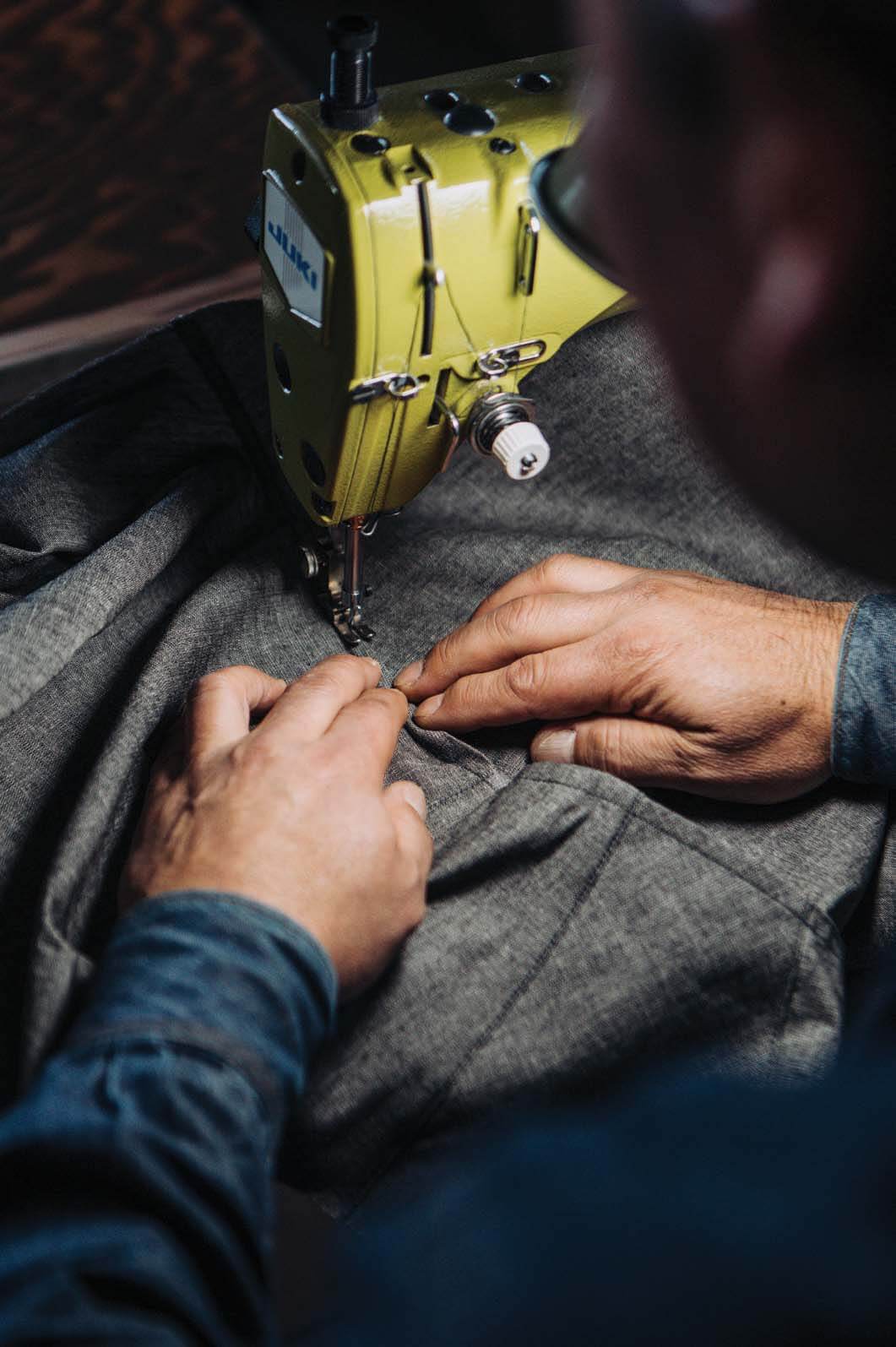
Shop details are not only reserved for Yamamoto’s workwear — he surrounds himself with them, as found in this machine he painted with Volkswagen’s vintage mango-green color. The machine also features a powder-coated stand and polished aluminum oil pan.
“Traditionally, workwear was made by one guy with a sewing machine in a mining camp or by smaller American companies, and I’m just trying to emulate that process,” says Yamamoto modestly. In fact, his jeans are a fine-tuned collaboration with the late Roy Slaper, the world-renowned denim craftsman Yamamoto calls his creative partner.
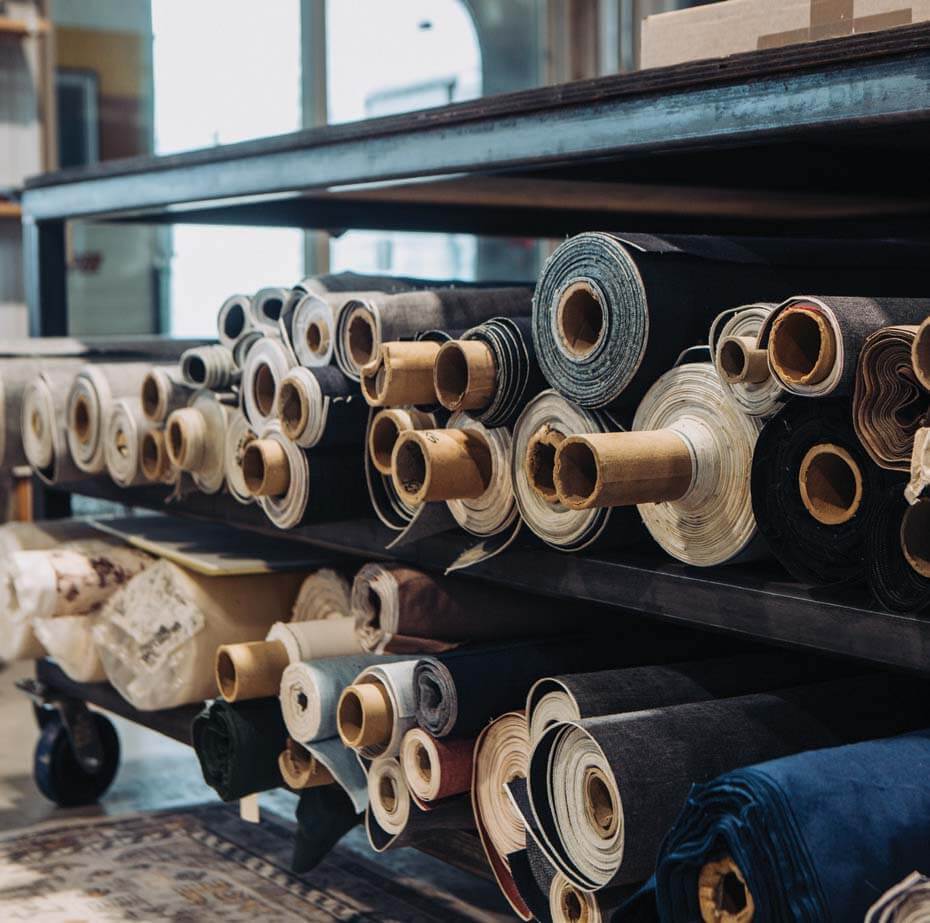
Yamamoto was already several years into making jeans when a curious and inspired Slaper came to him for some pointers. Slaper took the information he learned and ran with it far beyond what Yamamoto was doing at the time. Soon, Yamamoto was the one going to Slaper for advice, tips, and tricks. But right before Yamamoto and Saavedra moved to Montana, Slaper retired and gave Yamamoto all his leftover denim — denim that Yamamoto says is the last real American traditional denim to be found anywhere, made by the historic Cone Mills White Oak factory in North Carolina, which shut down in 2017.
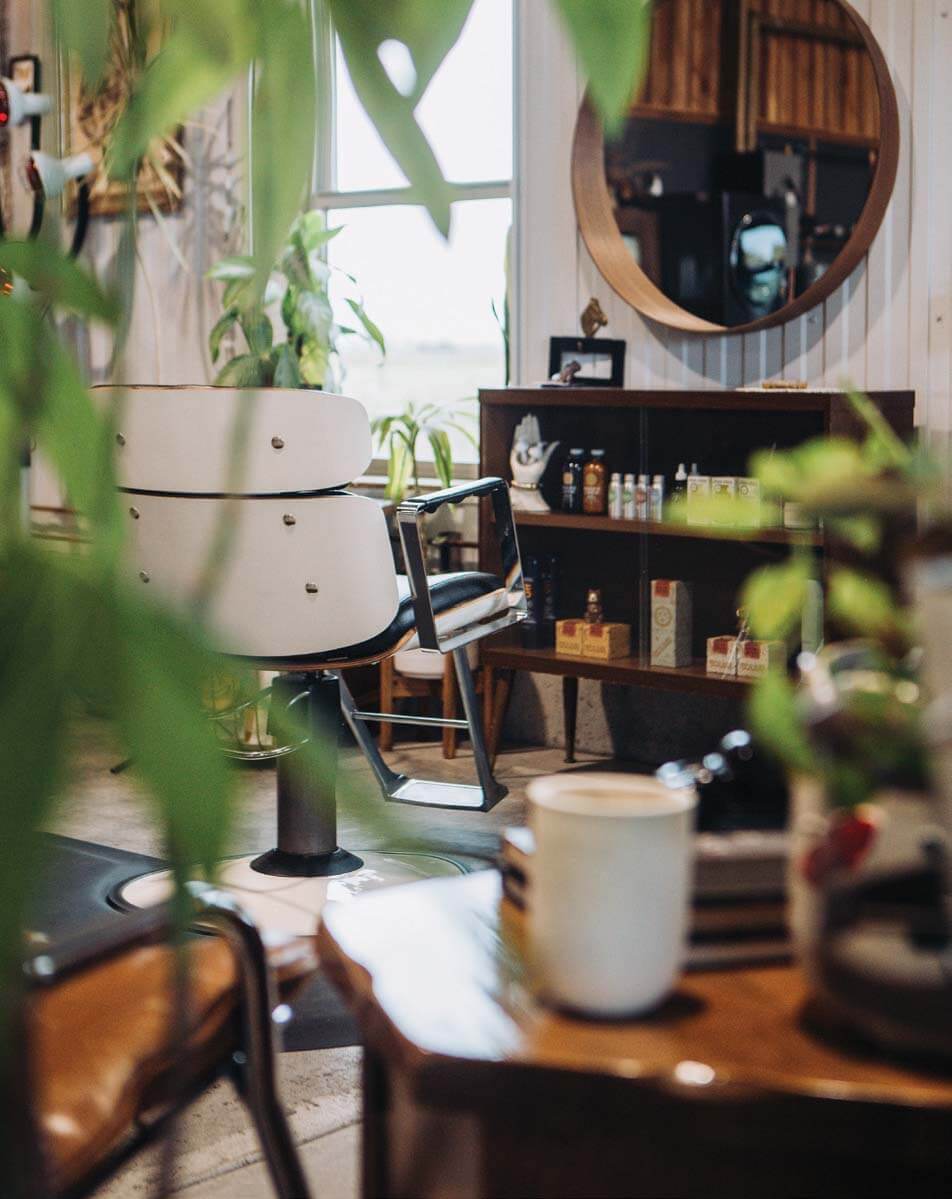
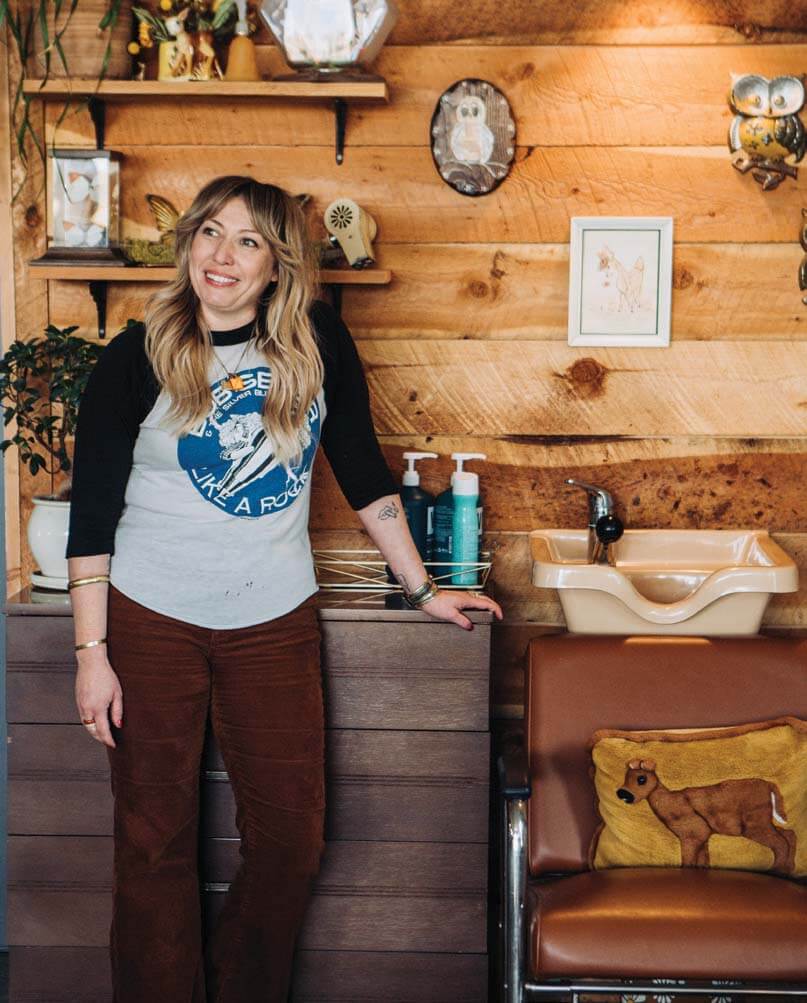
Saavedra’s own passion for design is on display from the single chair of her salon adorned with a decade’s worth of vintage finds.
“That’s where Levi’s — and everyone else — had their fabric made,” Yamamoto says. “They were made on these Draper looms invented in the late 1800s, and White Oak used those looms in this factory on a wood floor. The floor shook and created a special pattern in the weave of the denim, which makes this distinctly Levi’s Americana denim.”
“Regardless of where the looms ended up, denim will never be made in that factory on that floor again, so this is the last of it,” he adds, gesturing to his neatly stacked rolls.
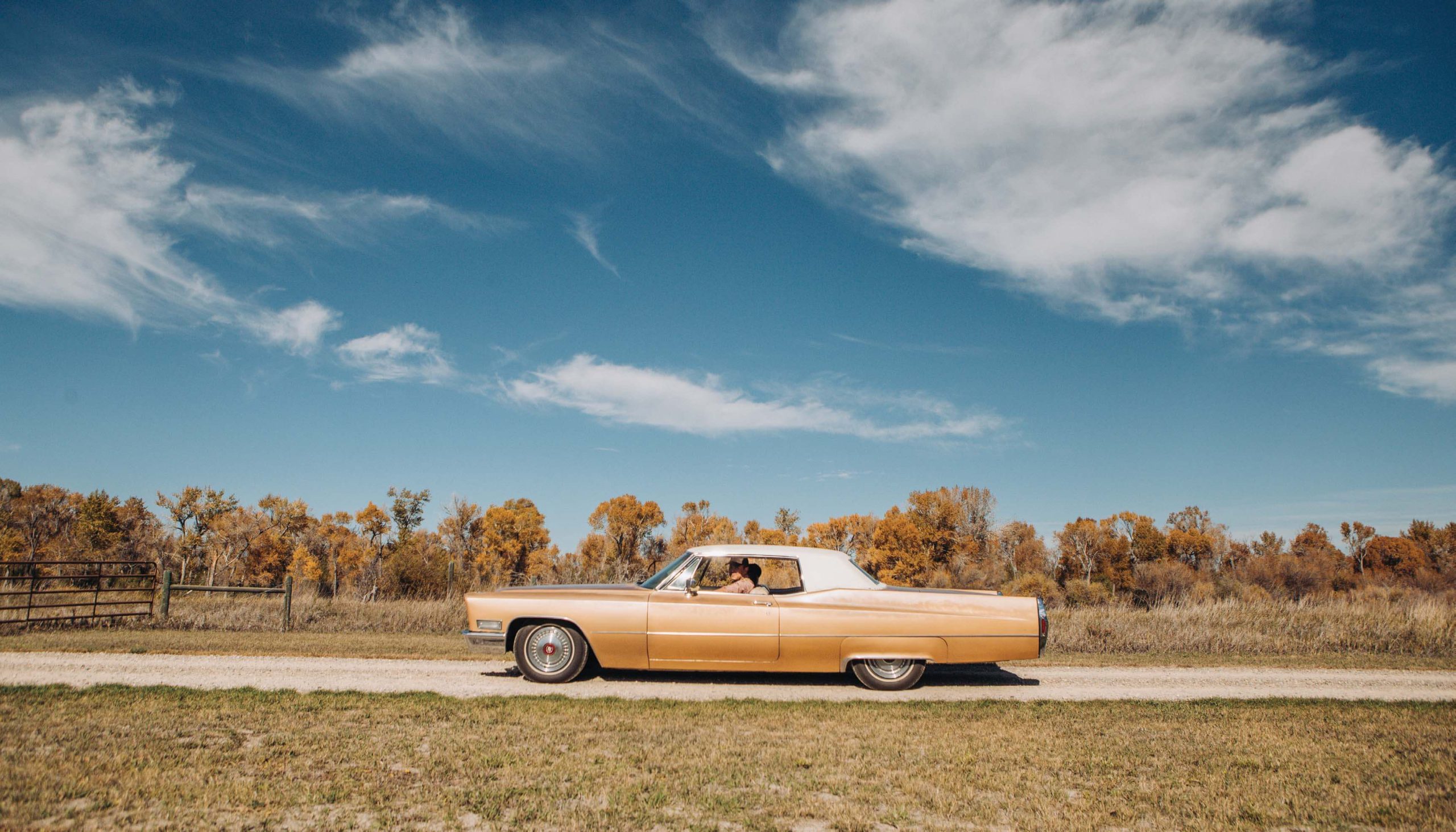
The 1968 Cadillac Coupe DeVille is just one of a few favorites from the vintage vehicle collection the couple enjoys driving into neighboring small towns.
In addition to receiving Slaper’s denim, Yamamoto also got a visit from Slaper in 2023. He suggested collaborating on a pair of jeans, combining his knowledge from years of studying traditional workwear with Yamamoto’s fine detailing. The pair labored from 6 a.m. until 8 p.m. for two weeks — it was what Yamamoto calls “the most intense work of my life.” This effort took his jeans to the next level, producing “a very, very legit and historically accurate pattern,” he says.
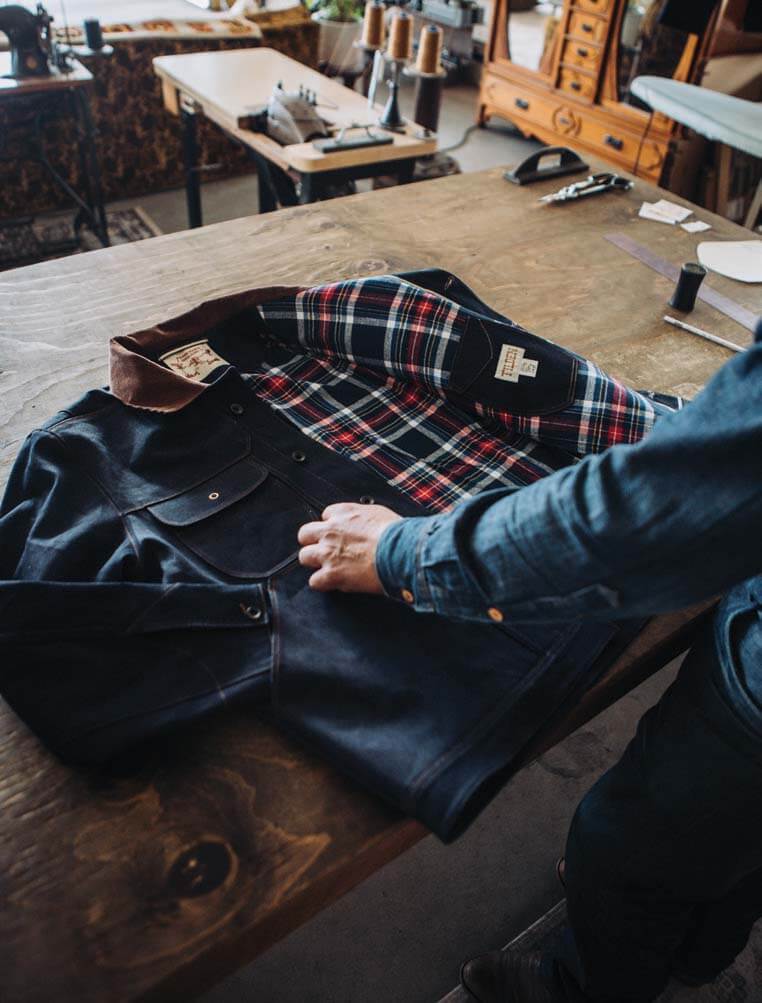
Yamamoto’s Ranch Jacket features a double Pima cotton thread experimental denim from the Cone Mills White Oak plant, lined with an American cotton flannel.
Yamamoto works with a lingering gratitude for Slaper, sewing seven days a week, refusing to cut corners or deviate from tradition. He talks about his five machines with the same pride a father speaks of his children. They are unique, nothing like the fancy machines used in a typical industrial operation. He has taken one apart, painted it with a mango-green Volkswagen hue, and chromed the bottom. The machine perches on a custom redwood slab, also built by Yamamoto. From this place of intricate detail emerge single-stitched garments, with not a raw edge to be found and adorned with hand-stamped elk-hide labels. He takes orders in a simple notebook, and Saavedra describes his jeans as “Hermès denim,” likening it to the luxury Hermès Birkin bag boutique production process.
Saavedra is a professional in her field but brings a low-key, down-to-earth approach as she connects with clients who hail from all over the country.
Easy laughter blends with an eclectic mix of music, the hum of Yamamoto’s machine drowned out by Saavedra’s blow dryer. They share news overheard at the bar and thoughts on their most recently viewed movie, and, of course, they relish in the stories of Saavedra’s clients.
“Because of the success of the shed that we had in Oakland, it was mandatory that we had a shop big enough that we could work together,” Saavedra says, standing among the many plants in her corner of the shop, wearing that original apron made by Yamamoto.
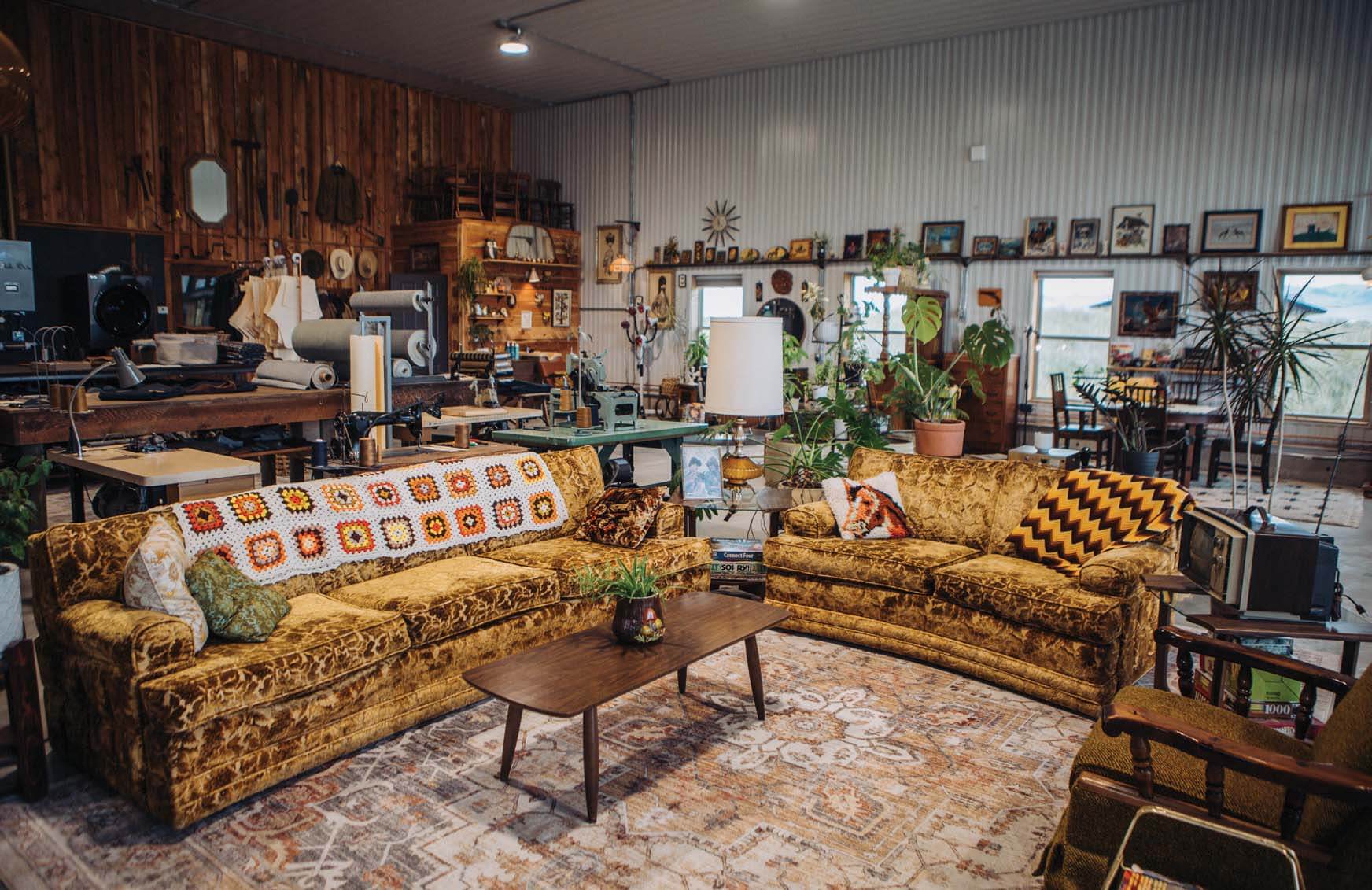
Every aspect of the shop feels inviting to guests, who are encouraged to linger and enjoy the various forms of art happening within the shop walls.
Not only is the space big enough, but it’s been curated in a way that entices clients to linger. Among the shop’s industrial finishes and Yamamoto’s equipment are Saavedra’s vintage finds, carefully selected and collected over a decade of exploring thrift stores. Rows of framed art in all sizes trim the window tops. Each item feels intentional and purposeful, in alignment with the grounded artists hard at work here.
Despite having Instagram to thank for connecting her with Yamamoto, Saavedra says she’s not big on social media, and her salon account has fewer than 100 posts. Her clients find their way to Waterloo on the recommendations of others, traveling from as far as Bozeman, Missoula, or even the Bay Area. After more than 20 years, Saavedra is thriving in a profession known for high burnout rates. She acknowledges it’s “wild” that she’s still doing it, but also marvels at what she sees and understands today.
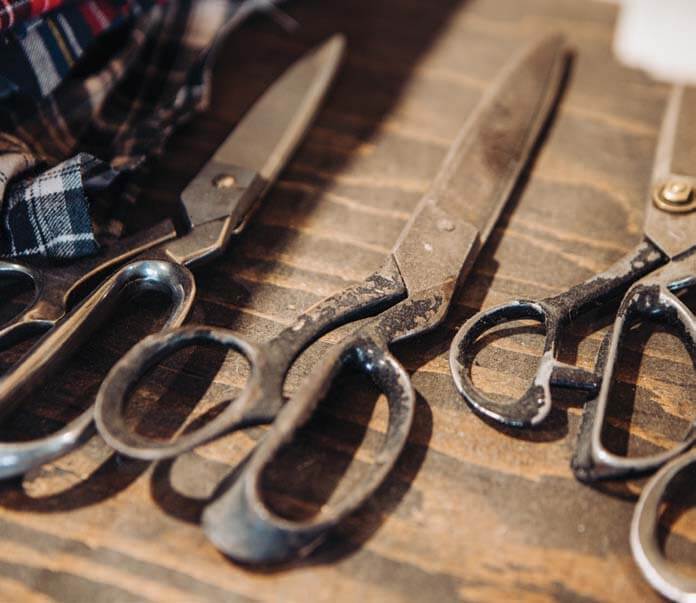
A collection of old tailoring scissors waits to be sent off to Oakland for sharpening. Yamamoto relies on the same 80-year-old man who he started with back in the early 2000s to get the job done.
“Because of how long I’ve been in this industry, watching it evolve, I know this never would have existed 20 years ago,” Saavedra says with a smile as she stands next to the vintage armoire that holds her tools and products, a 1968 Cadillac Coupe
DeVille parked behind it. Looking around, anyone can see she clearly forged her own path, right into an 80- by 40-foot pole barn.
As if a high-end haircut or expertly crafted denim isn’t enough, Saavedra and Yamamoto are happy to offer more. They reveal that some of Saavedra’s clients bring their partners to fish on the property during hair appointments. The couple is delighted to show visitors the good spots, climbing into the green interior of a white 1977 square-body Chevy truck, bumping along toward a small dry cabin next to the river. Yamamoto grooms walking trails that weave through the cottonwoods. The cabin, built by Yamamoto and a friend, is crafted from old telephone poles, gifted metal, and windows. Inside stands a 1930s Monarch wood cookstove.
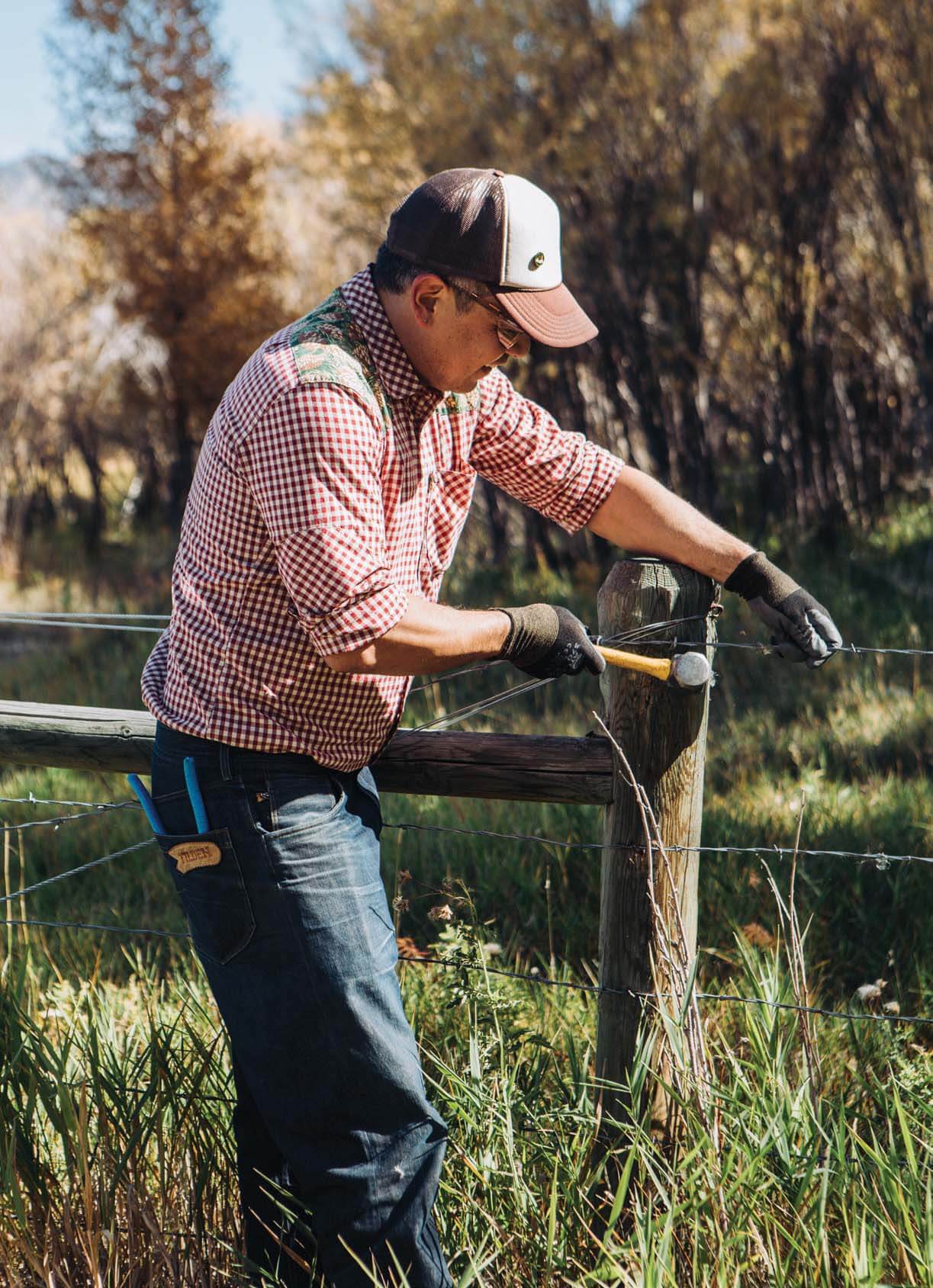
Yamamoto endorses the workwear he makes, mending a fence in his own shirt and jeans, which feature his hand-stamped elk-hide label.
Back in the shop, with Yamamoto settled at his green machine, he shares his next big plan. “I can’t do this forever, and I’d really like to phase this into an immersive nonprofit teaching program and kind of dedicate that to Roy,” he says, once again referencing the man he credits with any notoriety he’s gained since that pattern collaboration. Slaper died unexpectedly this past summer, and both Saavedra and Yamamoto get quiet, tearing up at the mention of honoring him this way.
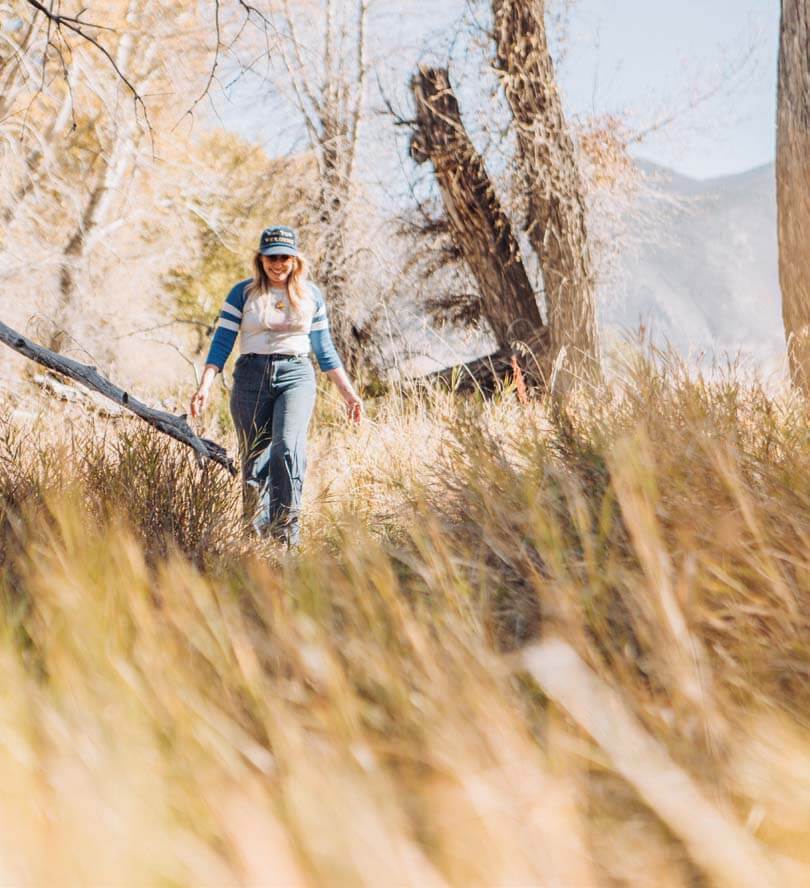
Saavedra’s daily walk on the ranch includes monitoring for wildlife.
The couple is passionate about extending the opportunities they’ve had in their careers, offering one-on-one apprenticeships to the rural youth population, providing options for another trade to be learned, another economically viable option in life. Currently, they are planning for more workspace and an option for staying at the riverfront ranch for the immersive experience they dream of sharing.
While they are certainly doing things differently out there in the shadows of the Tobacco Root Mountains, Saavedra and Yamamoto make it clear they care about preserving tradition and the spirit of Montana community. Both independently and collectively, they have been cultivating welcoming spaces and beautiful things their entire lives. Their commitment to authenticity and aesthetic comes through in the finished product, and they refuse to compromise on the values that have built their brands and their lives.
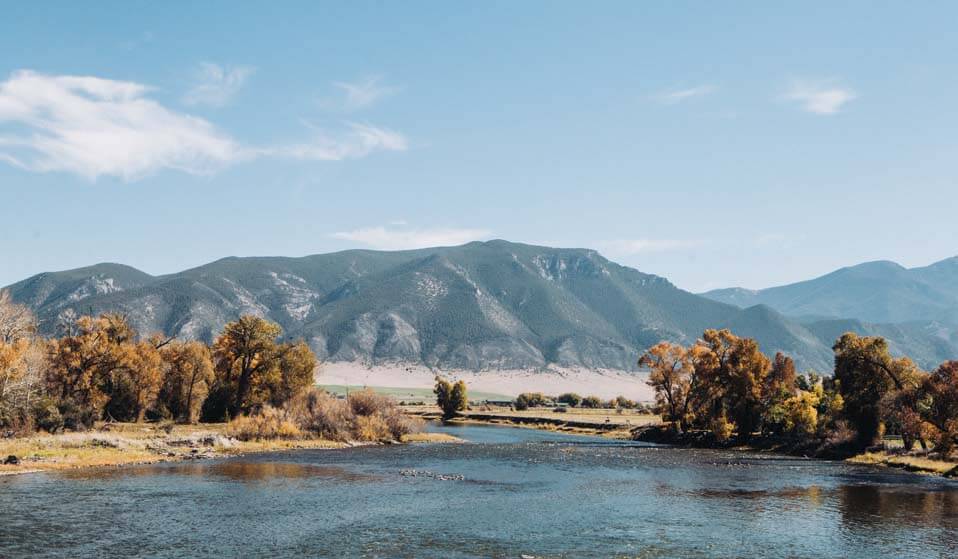
The couple’s ranch includes nearly a mile of the Jefferson River, which they enthusiastically and generously share with clients interested in fishing.
Jeni Brunner is a lover of Montana’s mountains and the stories of its people. She is the founder of Keep Her Wild and lives in the Ruby Valley with her daughter, Poppy.
Sara Gilman is a lifestyle and editorial photographer in rural southwest Montana focusing on agriculture, food, and art. A farmer and gardener herself, Gilman tells stories of the land, the people, and their work; saragilmanphoto.com.
No Comments