


25 Sep Women of the Grass
Sweat dripped from my brow as I bent over the grass, trying to figure out what I was looking at.
“You need to find the shiny green ones,” Melinda Bullshoe Kipp called to me.
“Is this one?” I asked, holding up a blade of grass.
“No,” she said, laughing. “Try again.”
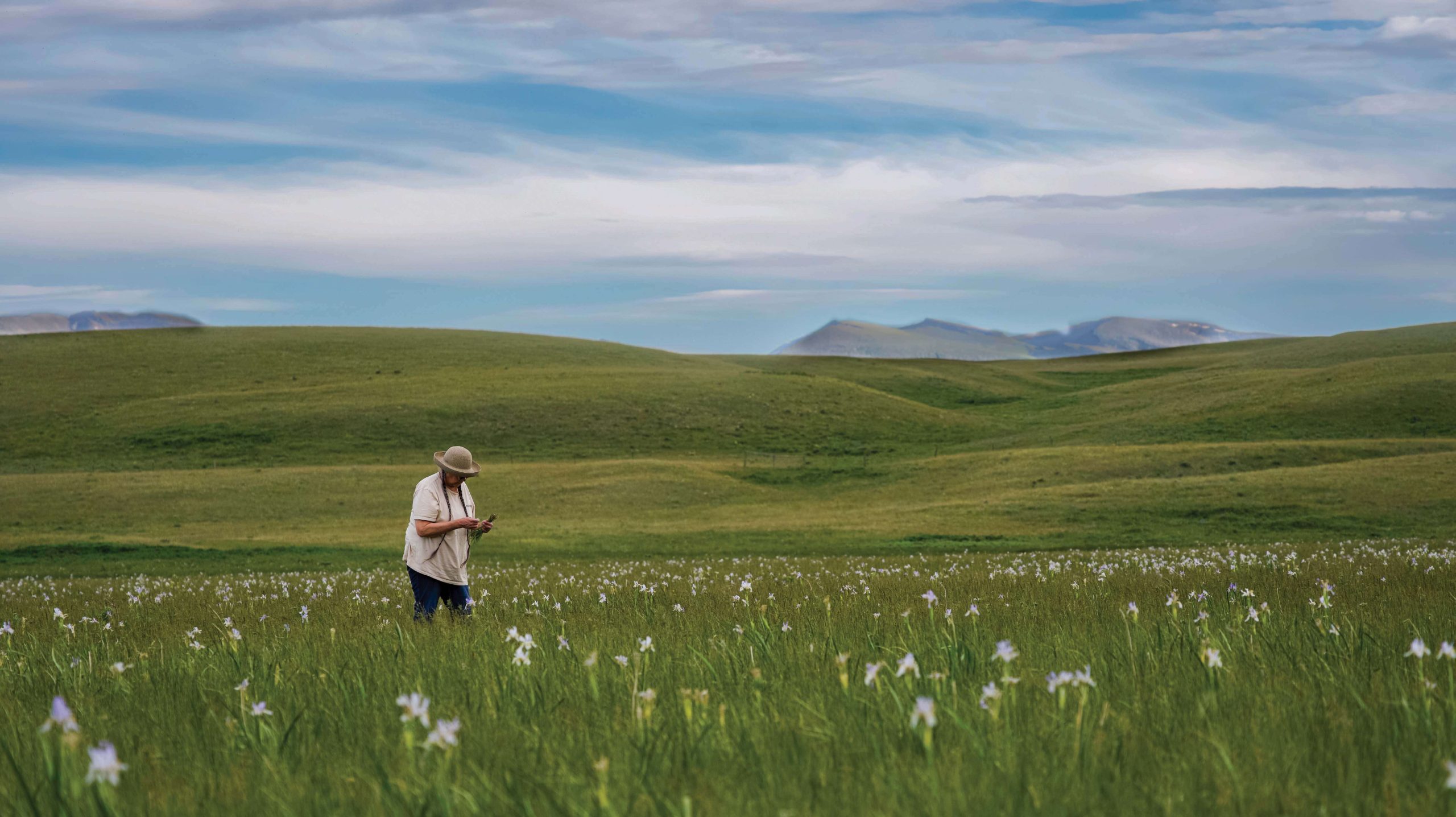
The July sun beat down on my back as I searched through the brittle prairie. Every step crunched beneath my boots. Months of drought had left the landscape cracked and dry, and the grasses faded to shades of brown and gold. Somewhere among them, sweetgrass was still holding on.
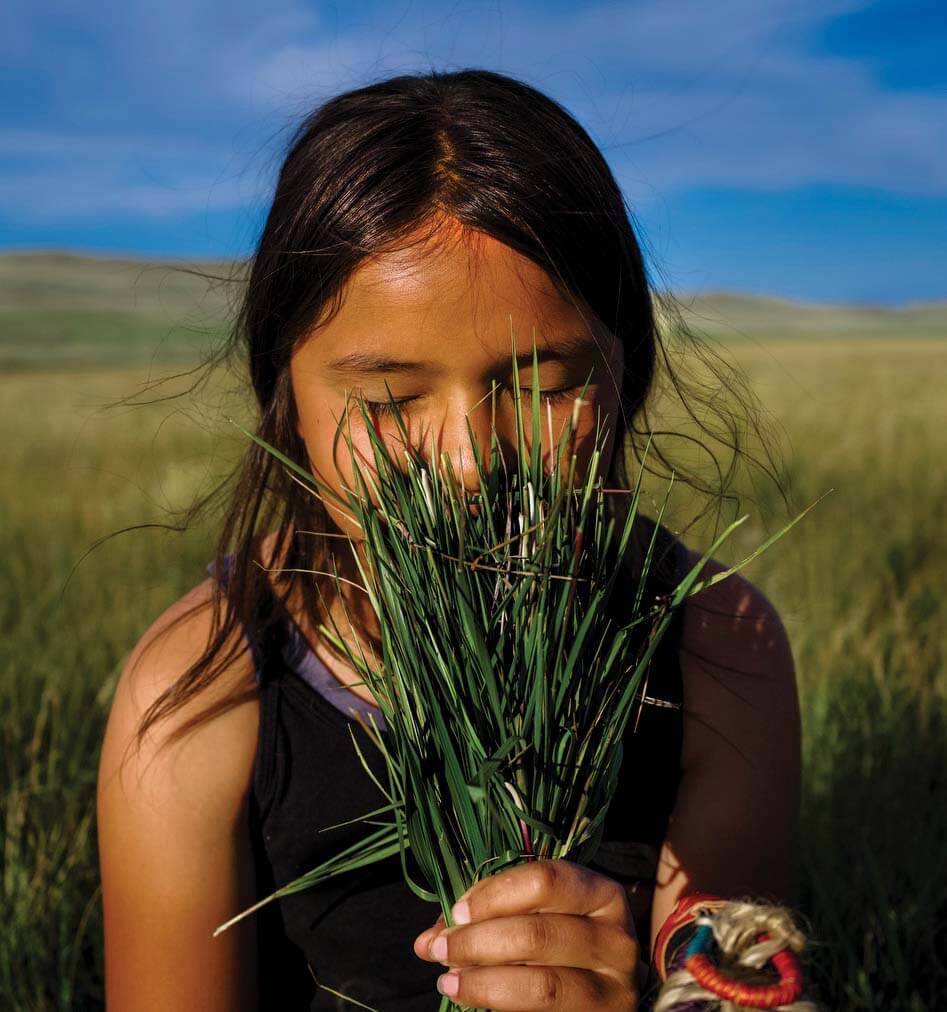
A young Blackfeet girl smells freshly gathered sweetgrass, learning to recognize the grass by its distinctive scent.
We had come to this place because the women believed it might still be here. Decades earlier, sweetgrass had grown abundantly across parts of the Blackfeet Nation in northwest Montana; however, decades of drought, overuse of the land, and the disappearance of wetlands had made it increasingly difficult to find.
A few yards away, Mary Jo Bullshoe moved confidently through the grass with her daughter, Molly Jo. Strapped to Mary Jo’s back was her young granddaughter, squealing in terror every time Mary Jo bent down to pick. Every so often, I would watch the women stop, kneel, and gently pull a single blade of sweetgrass from the prairie. Then another. Before long, they each held a small bundle in their hands.
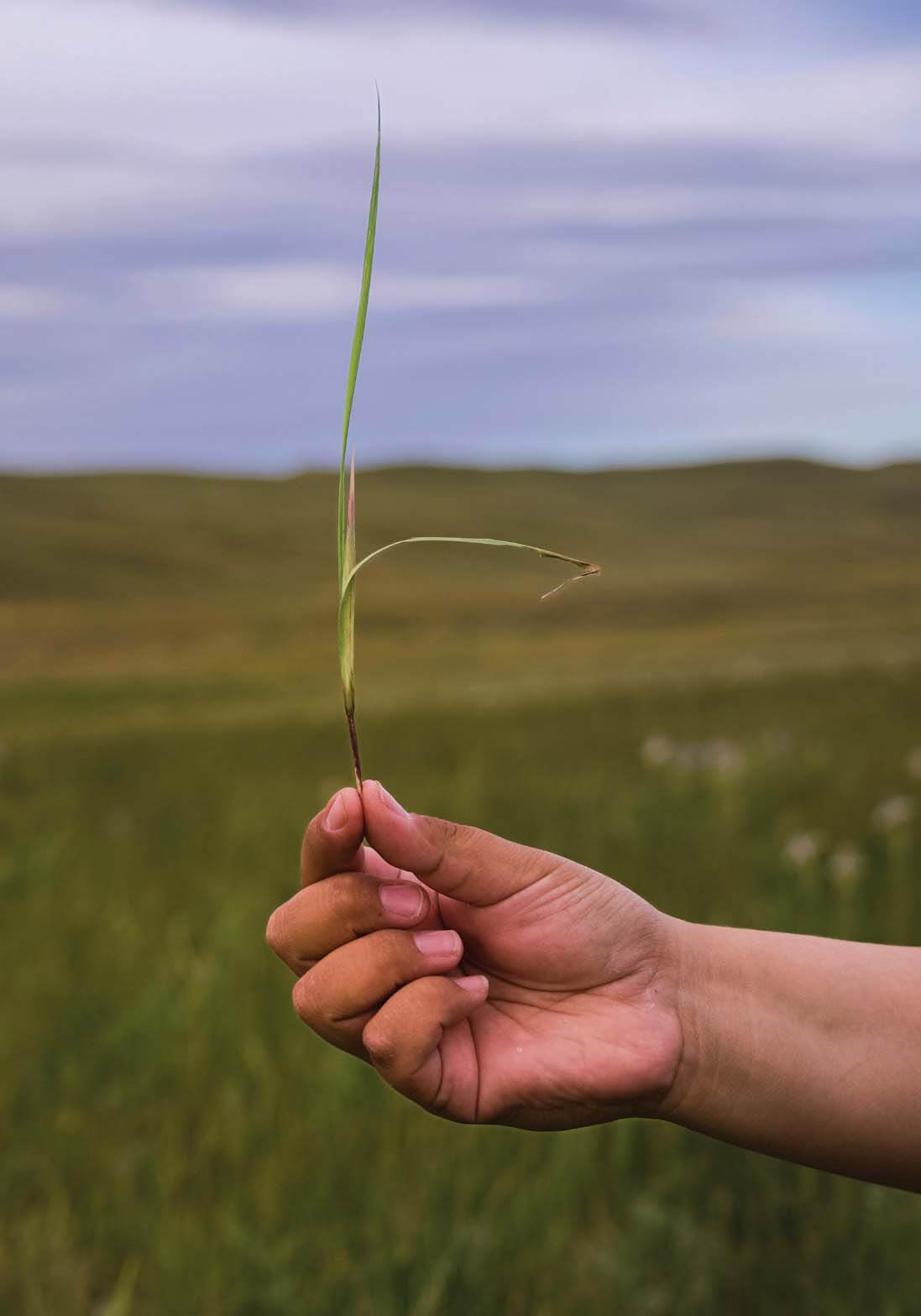
A single strand of sweetgrass picked during a drought shows how lack of water stunts the normally long blades.
I looked at the ground in front of me and saw only dry grass.
Why can’t I find it? I wondered.
Melinda could sense my frustration.
“You won’t find it if you’re rushing,” she said with a smile. “If you come here being noisy or impatient, the sweetgrass will hide from you. You have to come with good intentions. That’s why we offer tobacco before we pick it. We give something before we ask the plant to give something to us.”
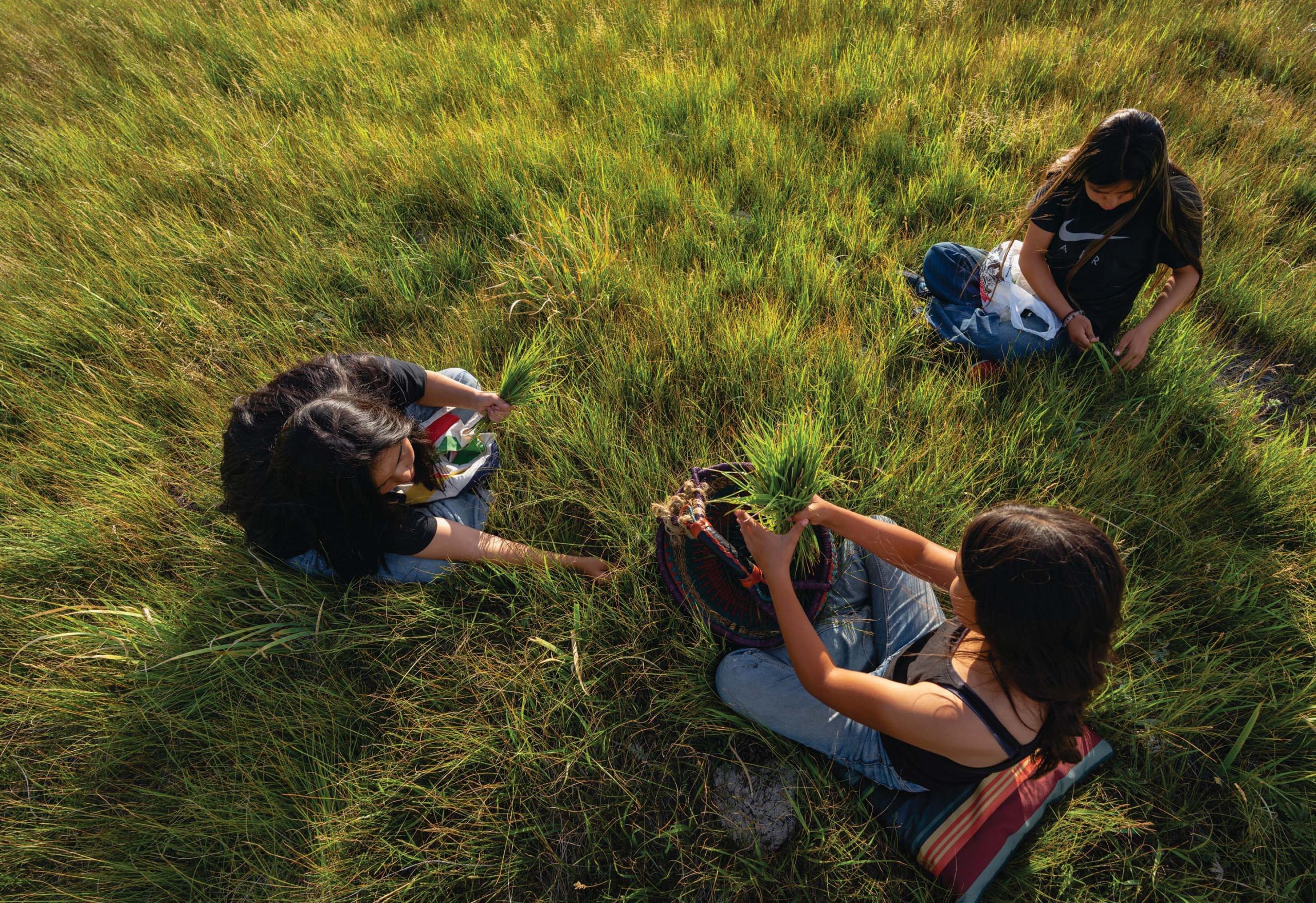
Young Blackfeet girls pick sweetgrass on the Blackfeet Nation in Montana.
I laughed, wondering whether the sweetgrass was hiding from me because I was trying too hard. Meanwhile, Mary Jo continued moving quietly through the prairie, spotting blades I would have walked right past.
After a while, Melinda stopped for a break and looked across the dry grassland.
“Did you know that when Mary Jo and I were growing up, the sweetgrass used to grow to our waists?” she asked. “Maybe even taller.”
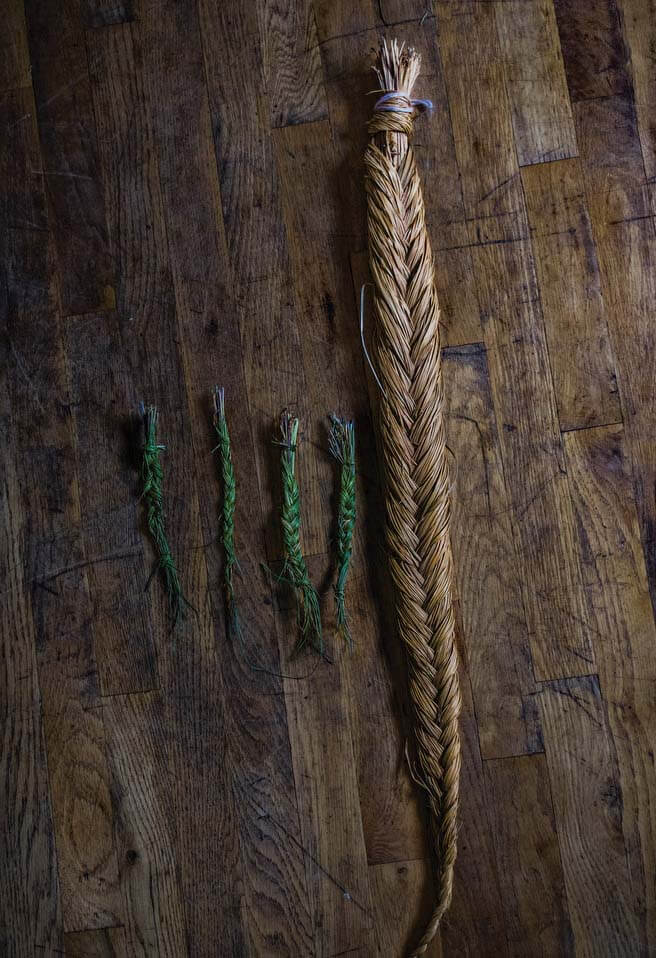
Shorter green braids on the left appear next to a larger braid on the right, the latter which was picked seven years prior, illustrating how severe the effects of drought have been on sweetgrass populations.
I looked down at the handful of 12-inch blades in Melinda’s hands, trying to imagine what she was describing. It was hard to picture this desiccated prairie filled with waist-high sweetgrass.
“What happened?” I asked.
“A lot of things,” she said. “People used to share the land. There weren’t fences like there are now. As the land became divided, the way people used it changed. Some areas were overgrazed, wetlands dried up, and women lost the ability to identify sweetgrass and pick it correctly.”
She reached down and gently brushed her hand across the grass.
“Sweetgrass needs moisture,” she continued. “But it also needs tall grasses around it to protect it from the heat. It also grows from the root, so if you remove the root, it will not grow back. It’s all connected.”
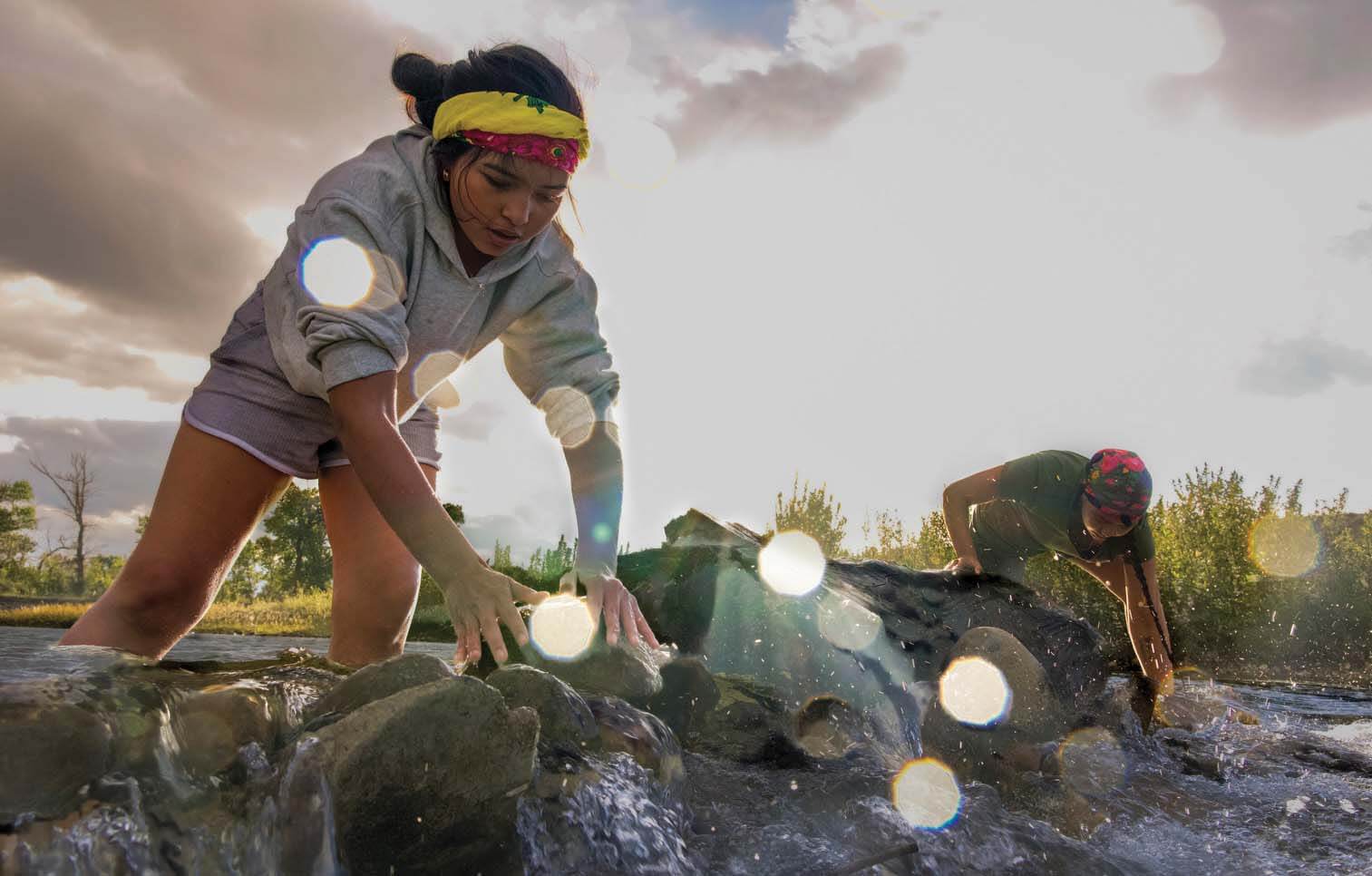
Addisyn Kipp-Blackweasel and Alia Kipp build a beaver-dam analog on Badger Creek with hope that the beaver dam will provide the necessary moisture that the newly planted sweetgrass needs to thrive.
Then she looked toward the hills.
“And then the drought came. It’s been years now. Every year we lose a little more.”
Standing there, I realized Melinda was talking about changes she and her sister had witnessed within their own lifetimes. The loss of sweetgrass wasn’t ancient history; it was still unfolding around us. As she shared her memories, I couldn’t help but wonder what kind of landscape my own children would inherit.
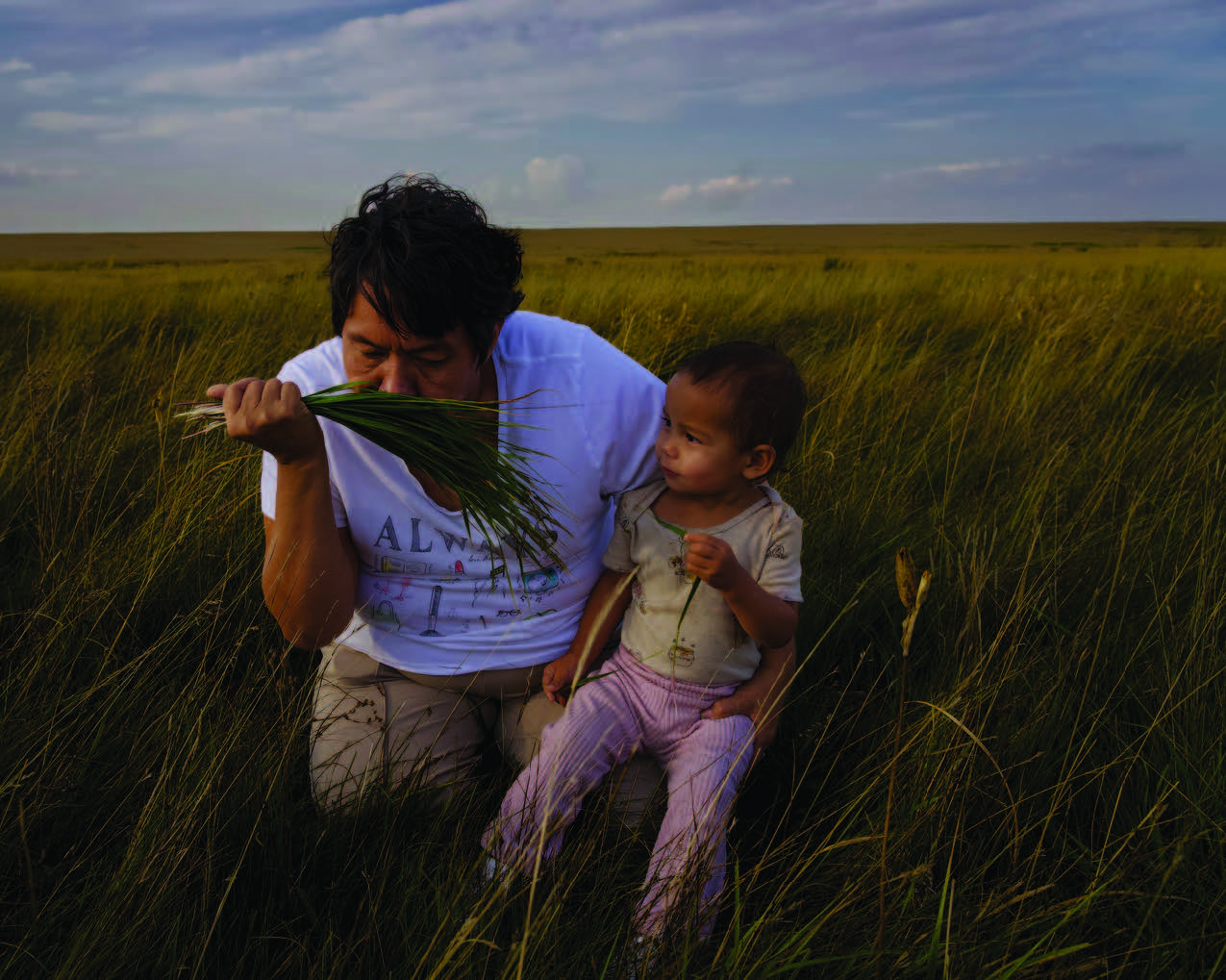
A Blackfeet grandmother holds her granddaughter as she smells a batch of freshly picked sweetgrass.
Over the next several years, I would return with these women again and again. Eventually, I learned how to identify the plant at first glance. Now I understand its patterns, its habitat, and its connections to our people and the environment. In the years that followed, the search for sweetgrass became something else entirely. Rather than documenting its disappearance, I began documenting its return.
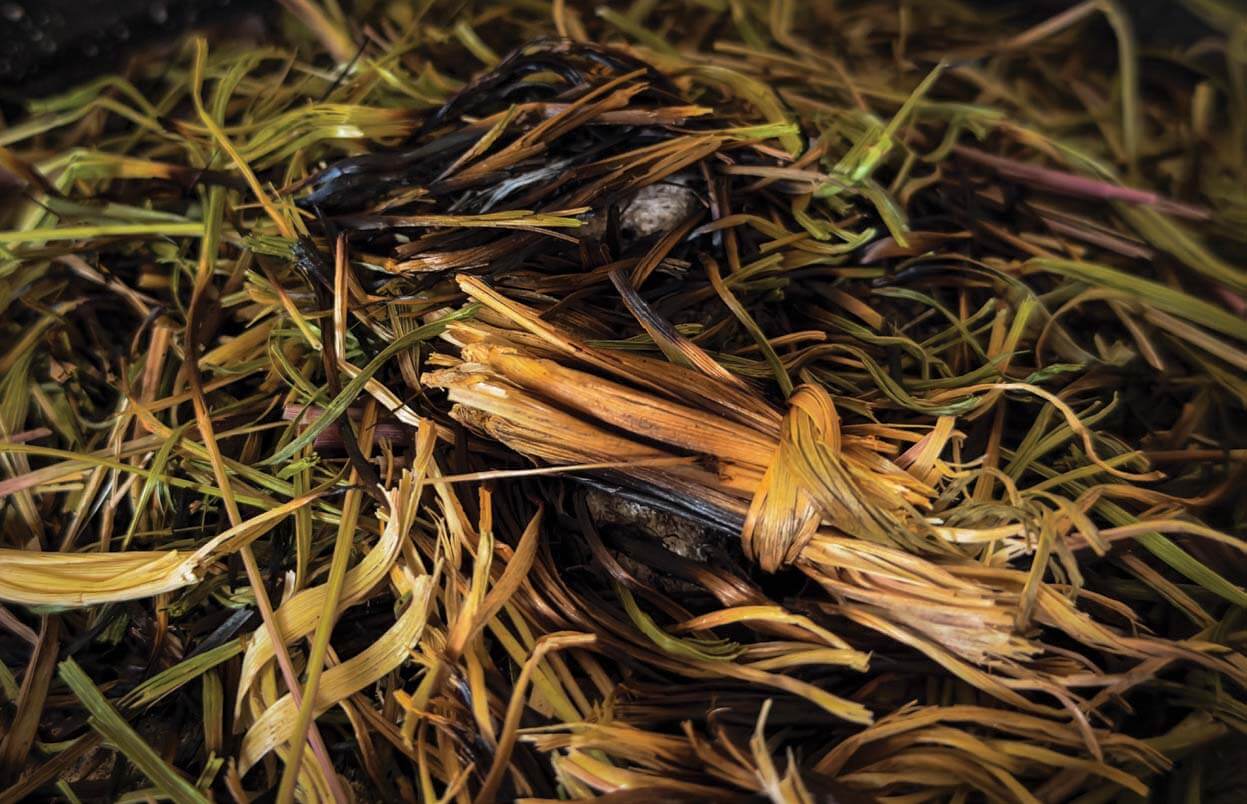
Sweetgrass rests in a smudge pan after it has been burned for daily prayers.
Today, I find myself in the role of the teacher, just as Melinda and Mary Jo were for me. I take the young girls in my family out onto the prairie and show them how to identify sweetgrass, reminding them to leave the roots untouched and gather only the blades. I teach them to move slowly, to stay quiet, and to approach the plant with patience and good intentions. Before gathering, we offer tobacco in gratitude for what the land is willing to give us. These are the same lessons my elders shared with me, and it is now my responsibility to pass them on.
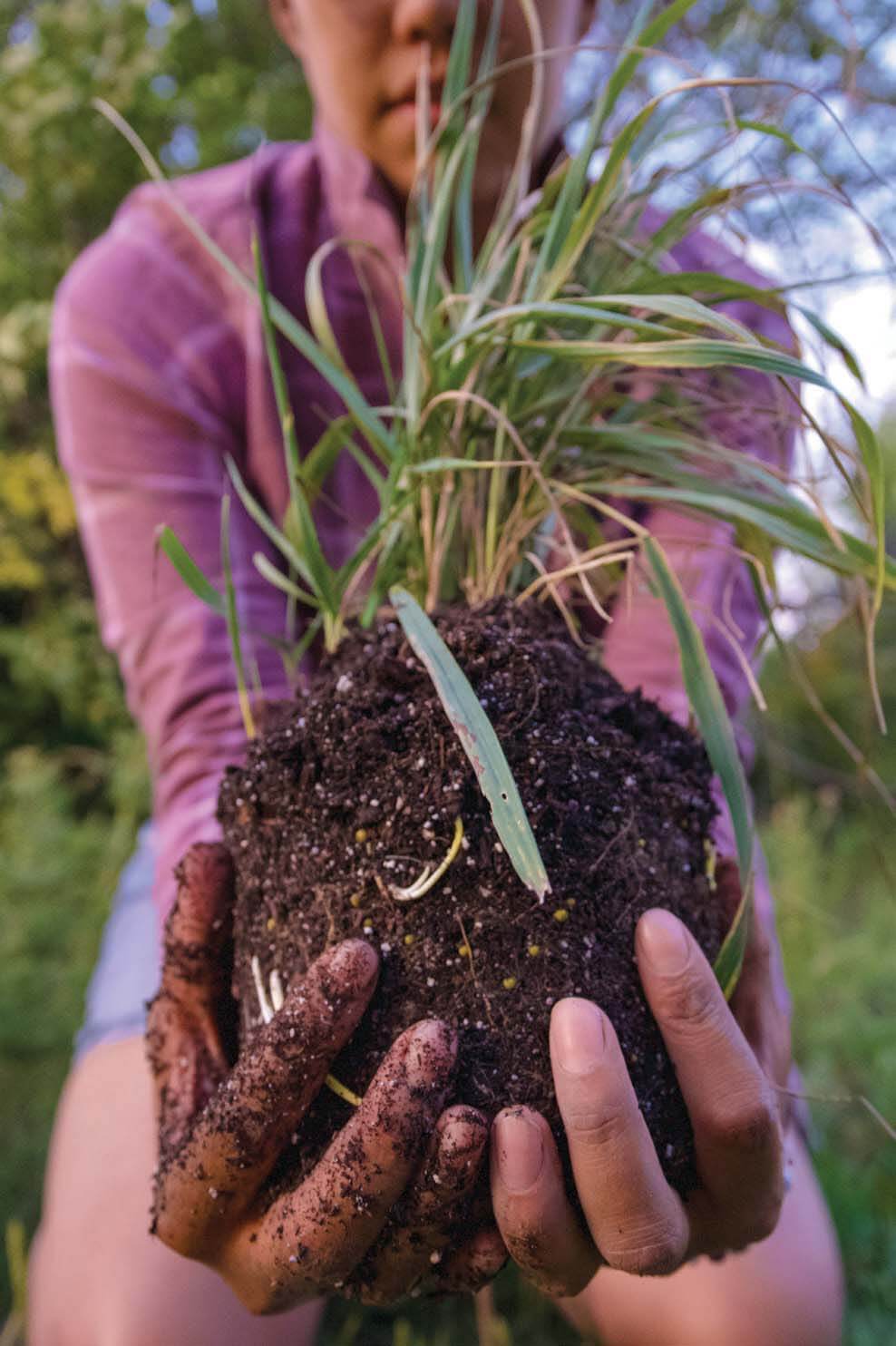
Propagated sweetgrass is prepared before it is planted.
It’s been several years since that first afternoon searching for sweetgrass with Melinda and Mary Jo. Since then, the women in my family have worked together to restore sweetgrass across the Blackfeet Nation, starting with the south side of the reservation known as Badger Creek.
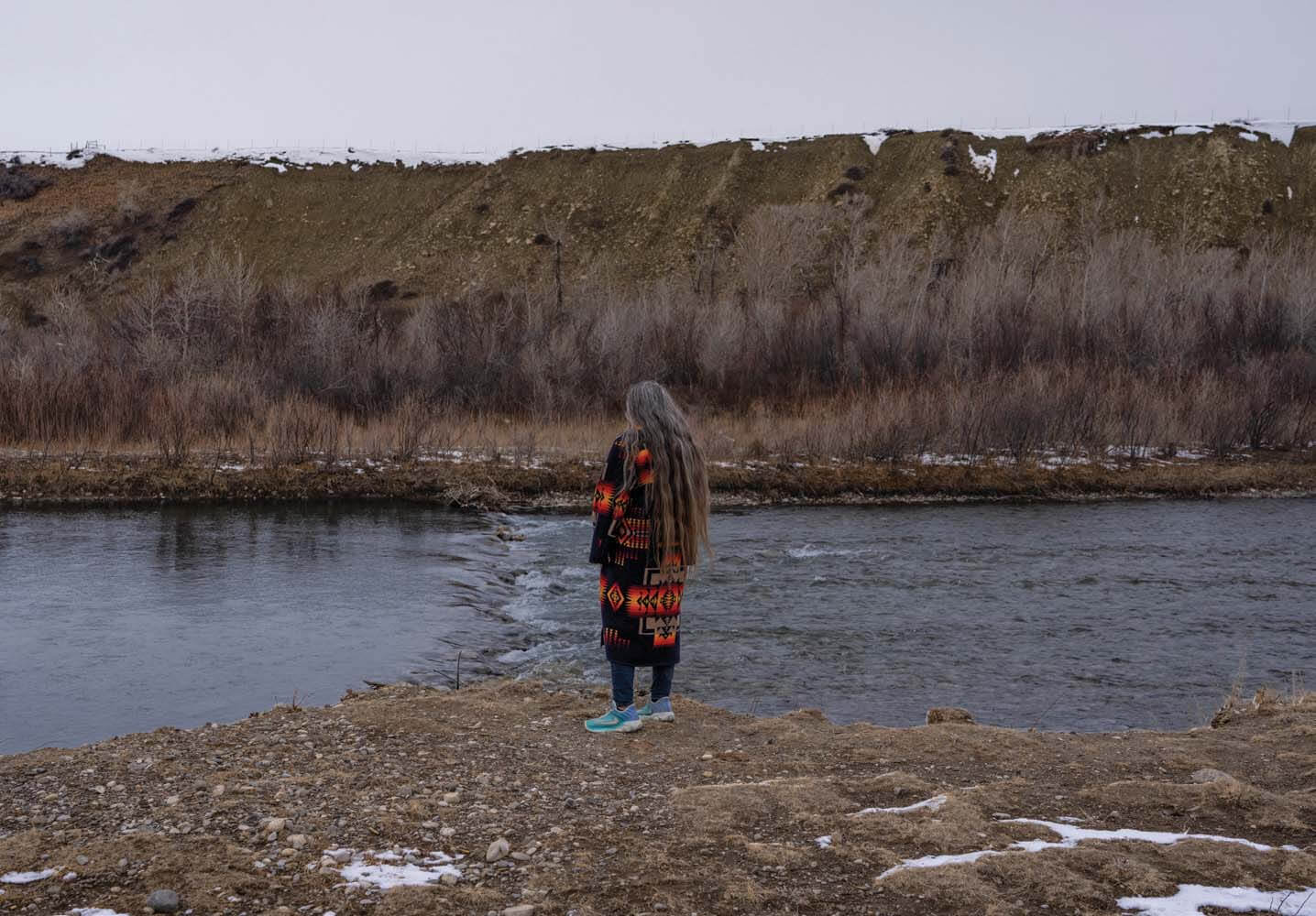
Nahtoo Kipp inspects the beaver-dam analog built two years earlier on Badger Creek.
It is slow work. Sweetgrass spreads primarily through underground rhizomes, so meaningful changes are measured not in months but in years. Slowly, the landscape has begun to respond. Our test plots are thriving, with blades growing longer and thicker, spreading beyond the areas where we first planted them. Alongside restoring the grass itself, we have worked to restore the conditions it depends on. By building beaver-dam analogs, we have returned moisture to areas where sweetgrass once flourished.
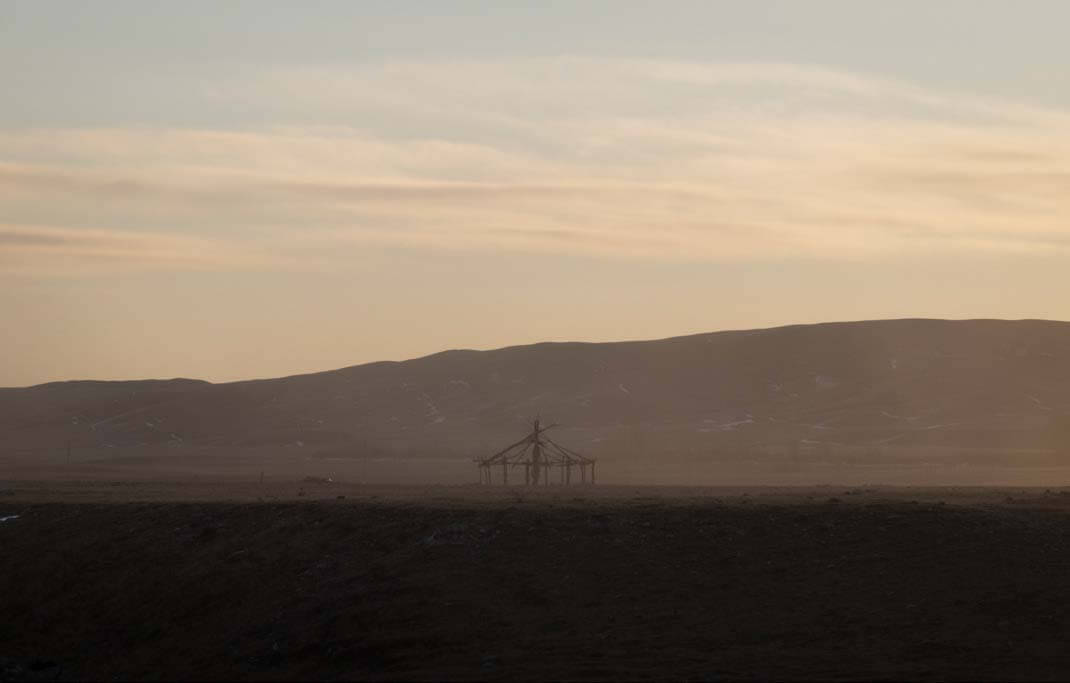
A February dust storm on the Blackfeet Nation shows the severity of the on-going drought as winters become increasingly more dry and warm. In the distance, the remnants of an old summer ceremony structure called an Okan Arbor, where sweetgrass is used by the Blackfeet to complete the ceremony, stands strong against the wind and dust.
As the sweetgrass has returned, so too have opportunities for young Blackfeet girls to learn from the land instead of only hearing stories about what once grew there. For years, many of these teachings risked becoming memories rather than lived experiences. Today, the girls don’t have to imagine what their grandmothers describe. They can kneel in the grass beside them, gather sweetgrass with their own hands, braid it, burn it as medicine, and understand why it has always been sacred. The restoration has never just been about bringing back a plant. It has been about restoring the opportunity to teach, to learn, and to strengthen the relationships between our culture, our people, and our land.
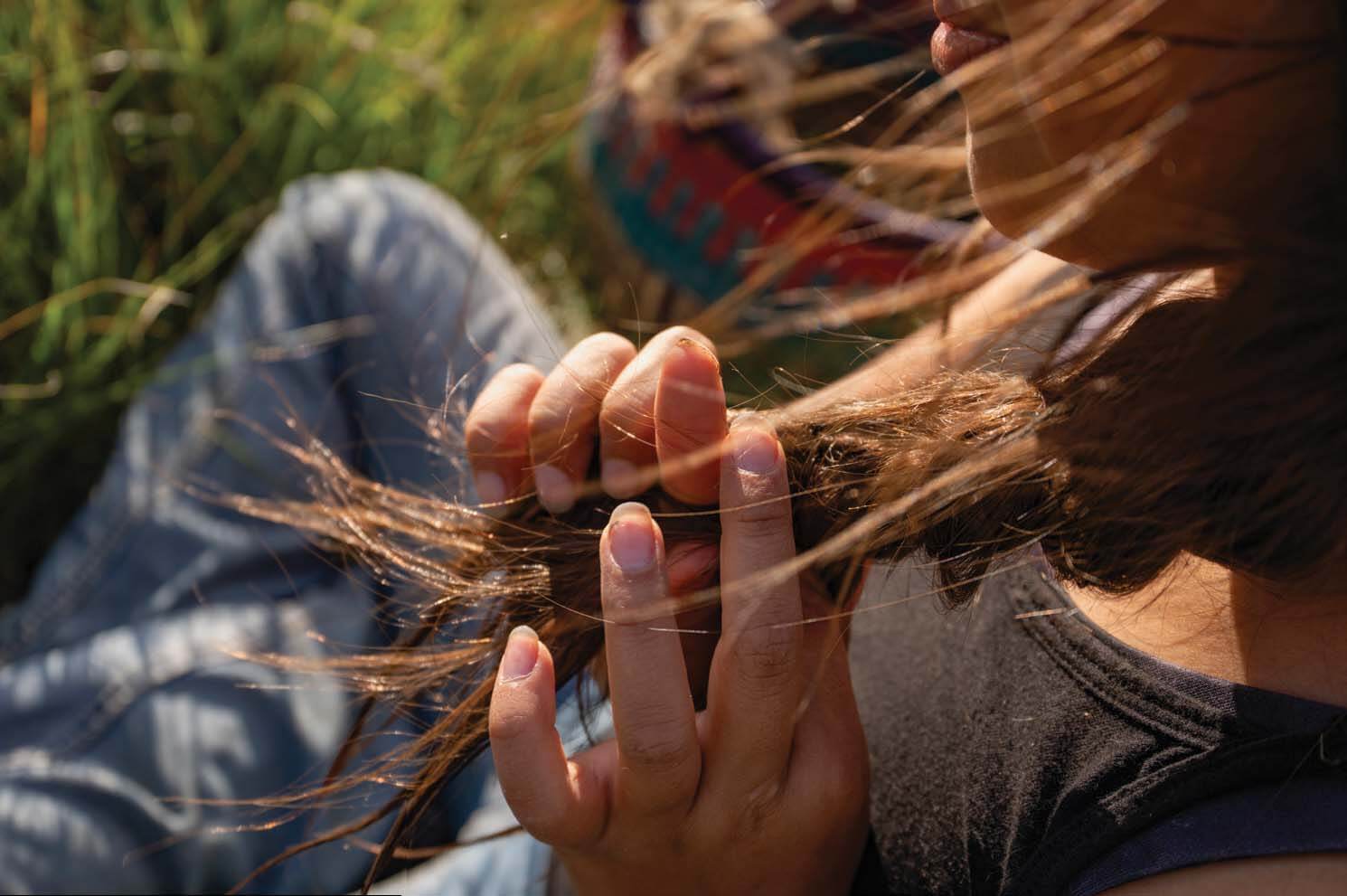
A young Blackfeet girl braids her hair, mimicing the action of braiding sweetgrass for later use.
My favorite moments happen when I watch the girls discover sweetgrass for themselves. They look down at the prairie as I once did.
“Is this one?” they ask.
“No,” I say with a laugh, hearing Melinda’s voice in my own. “Try again.”
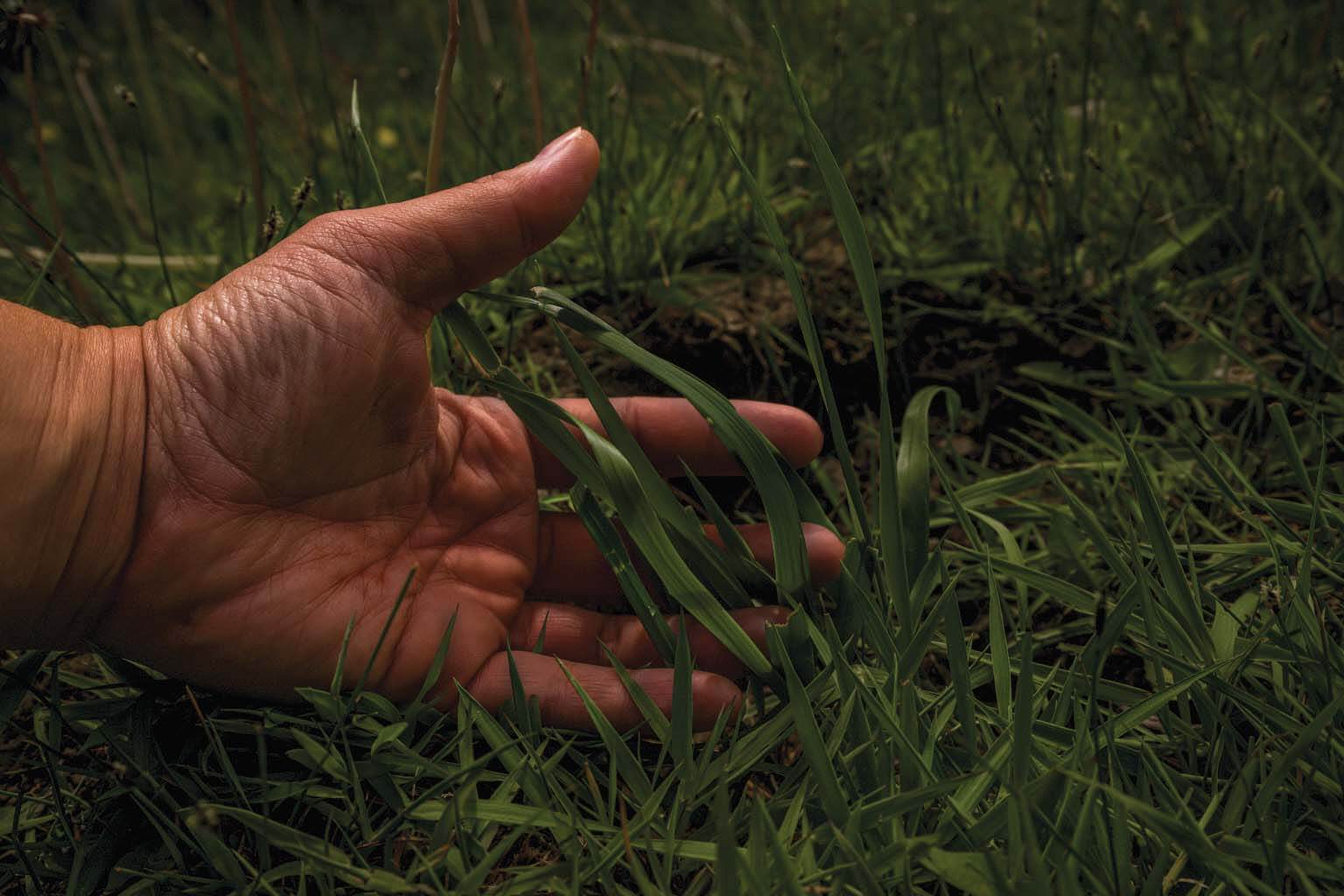
One year after sweetgrass was planted along Badger Creek, regrowth is a welcome sign fueling hope in restoration efforts.
Then I kneel beside them and point to a small patch of shiny green blades. Their faces light up. “Oh! Now I see!”
Before long, they are gathering bundles of sweetgrass for their grandmothers, who can no longer bend to harvest themselves, and for their own homes, where they are learning to use it and carry forward traditions that nearly disappeared alongside the plant itself.
At the start of this project, the elder women asked me to do more than simply take photographs. They wanted me to document the changes taking place on the land — the drought, the return of sweetgrass, and the restoration techniques we were experimenting with — so that years from now we could look back and understand how it worked, what didn’t, and how the landscape responded over time. My camera became more than a storytelling tool; it became part of the restoration itself, creating a visual record that could help guide future efforts.
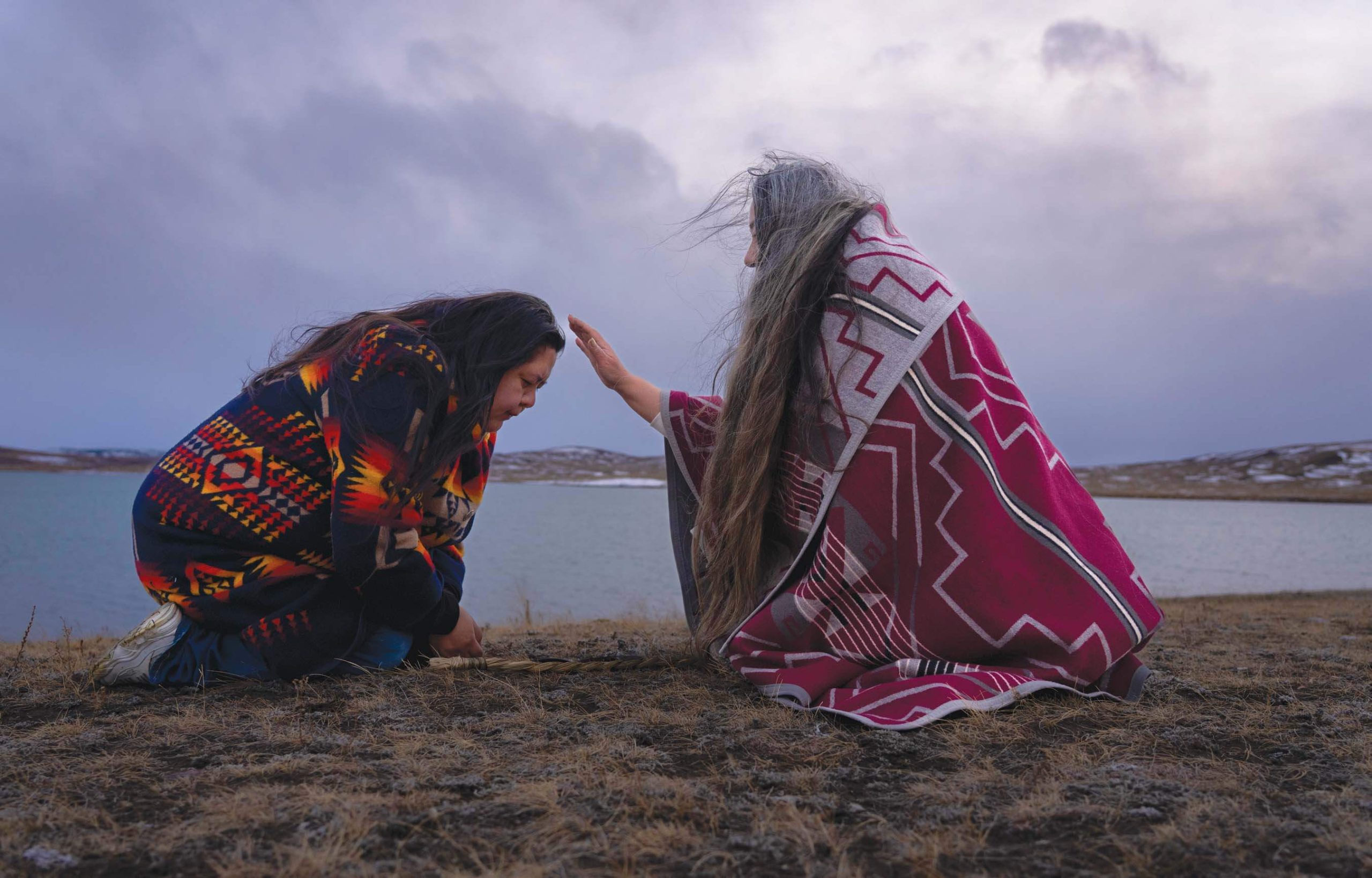
In addition to smudge and prayers, sweetgrass is used to bless others.
The responsibility also comes with boundaries. Not every part of this work is meant to be photographed. Some ceremonies, prayers, and teachings remain within the community, where they belong. As a documentary photographer, I have learned that respecting those boundaries is just as important as making the image itself. Rather than documenting every moment, I try to photograph the relationships, the hands planting sweetgrass, the conversations between generations, the joy of young girls discovering a plant for the first time. Sometimes the most meaningful parts of the story are the ones that remain unseen. My role is not to reveal everything, but to honor what I have been trusted to witness. If these photographs help future generations remember not only what sweetgrass looked like historically, but how it was brought back, then they will have done exactly what the women have asked of me.
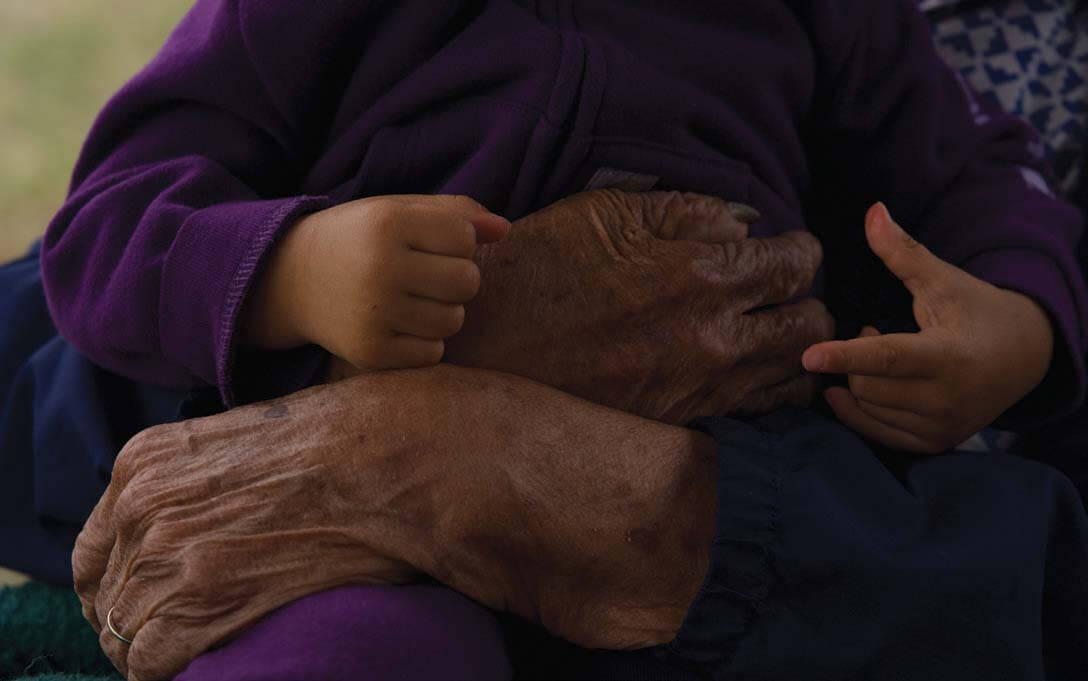
A young Blackfeet girl sits with her grandmother, knowledge being passed down one generation at a time.
Whitney Snow is a documentary photographer dedicated to capturing stories depicting the emotional connection between Indigenous people and their environment. She focuses on narratives illustrating Indigenous communities’ struggles to preserve their way of life, including efforts related to environmental and cultural conservation and language revitalization.
No Comments